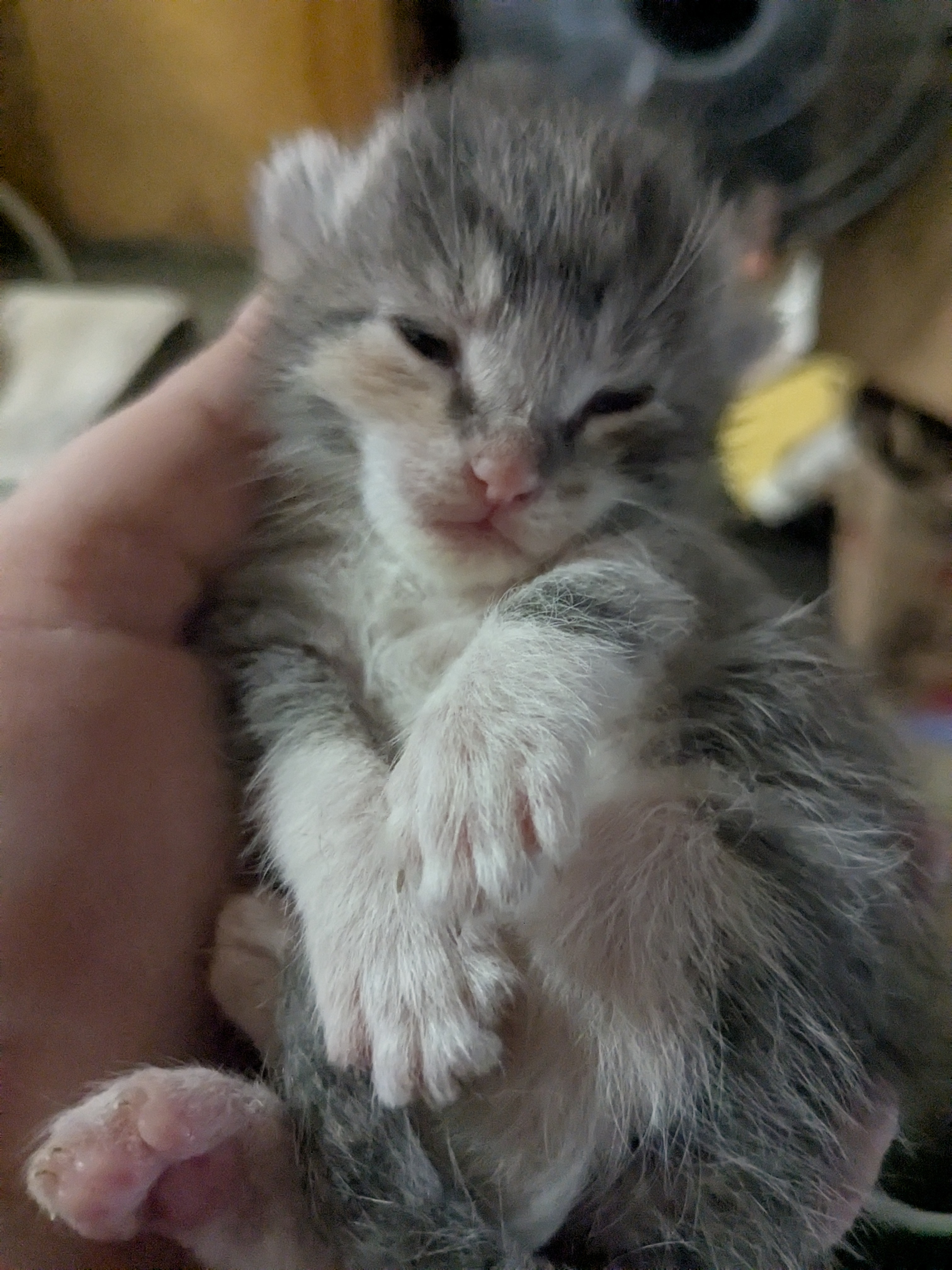
Friday, June 13, 2025

Traditional Women's Roles

 And now we have June 9th. Yeah, I'm going to do this. 

So, this one doesn't really have a lot of sources because, again, this is just something that I'm going to pull from my knowledge and common sense. It also isn't entirely Pride, but I'm putting it here anyway because it seems to fit. 

By 'Traditional Women's Roles', I am referring to really old roles. Not just in the last 10 years or something. 

The first real time we can talk about Traditional Roles is with the Hunter-Gatherer societies. 

Here's the thing. Men went hunting because they were more expendable. If a man died, fine, but if a woman died, so did the babies she would have brought to the group. Considering what they knew at the time, they might not have known that men were actually involved in that at all this time. There's also that women couldn't run after prey as easily while pregnant, and they needed the job that meant they could have noisy babies with them. For those reasons, among others probably, women needed to gather the slower moving nuts, berries, fruits, and veggies, instead of the faster moving deer or something. 

Unlike what a lot of people think though, I do need to point out that those nuts and berries were the bulk of their diet. They didn't have meat every day, and for a very long time, they didn't even have a lot of meat. Unlike the whole 'bring home the bacon' suggestion, the guys weren't doing most of the providing. 

So a quick recap. Men hunted because they were more expendable. Women stayed with the kids because they had to nurse them. Women provided more of the food. 

Could men stay with the women? Sure. There were probably plenty of men that couldn't run as fast/far and stayed with their mothers and sisters to gather food and look after the children. 

Could women have hunted? Yeah, there were probably women that went out with the hunters, since they could hunt just as well as anyone else, as long as they weren't pregnant or nursing. 

When everyone started settling down to farm, women were in charge of growing the plants to gather and the kids, and the men still hunted. 

Then they had herds that had to travel with the grass, and that led to them being away from home a lot if needed. Again, not good for women that might be pregnant and have babies. 

The herds started staying in a single area, and got fenced in, and the men started taking over more of the grunt work because they tend to be better at that, and women stayed with the kids. 

At this point and following, here's what you need to focus on. Women got kept at home at least in part because those women were having kids and were the future. They were protected because they were the future. They got traded around like chattel because idiots forgot that and instead focused on them not having the same skills. 

A lot of the more simple cultures allowed for same-sex relationships, trans people, or anything else that popped up, because it wasn't a big deal to them. I say simple, but that's not a bad thing. It just means the ones that don't get bogged down in complications and rules. Things like the Samoan Fa'afafine were fine because they still had work they could do and they still did important work. It's not like they were lazy because of it, and there was a lot more important things to think about. 


So, there's a reason for tradition. 

But, there's no reason to let tradition stop you from doing anything. Most of those reasons aren't valid anymore, so don't let them get in the way. 

Culture changes slowly, but it does change. So, to quote Ghandi, 'Be the change you want to see in the world'. So, if you want the world to change, do it, but do yourself a favor and don't expect it to be immediate. 

Sorry if this is weird. Sorry if it doesn't make sense. I'm apparently ranting today.  


Thursday, June 12, 2025

A Field Guide To Gay Animals

Welcome to June 8th. 

This is a short one. 


A Field Guide to Gay Animals is a podcast hosted by Owen Ever and Laine Kaplan-Levenson, discussing the more than 1,500 different species of animals that have demonstrated homosexual tendencies, or intersex/transexual/etc abilities. They talk about everything that proves those idiots who claim God doesn't like gays to be wrong. 

That definitely sounds like something to listen to for Pride Month, and something I look forward to making more of these posts from those episodes. 

Sources:
I couldn't find a website for them exactly, but this is a link to a place that has the episodes listed. 


Fa'afafine and Fa'afatama

 June 7. I know it's not, but it is. I planned to do a month of Pride, and internet be damned, I'm going to do them. Even if it means they continue beyond June, or I'm posting twice a day for a bit. I'm going to get there. 

Today is the Fa'afafine and Fa'afatama. As much as I like the idea of these people and the culture they come from, I am going to misspell them and I hate the idea of that after all the bullshit they have to put up with from everyone else. For that, I apologize ahead of time for that, and I am going to do my best, but there are a lot of a's and I'm probably going to go cross-eyed trying to double check them. 

These terms refer to two of the four Samoan gender options. They aren't exactly trans, but that might be the easiest way to explain them. Fa'afafine, meaning 'in the manner of women', refers to boys who are more drawn to the female role in their culture, and fa'afatama, meaning 'in the manner of men', are girls that are more drawn to the male role. Depending on the individual in question, they might feel that they are female/male despite their DNA, but they also might just feel like they're in the middle, or that they are exactly what their DNA says they are and just prefer to act/dress like the other. 

One of the really interesting things about these people is that, since they move between the realms of male/female, they can actually do things that would be considered taboo for others, like talk about sex. 

They also help keep some traditions alive, like the Taupou dance, which was traditionally a woman's dance of grace, then the Christians came to apply their weird opinions to things and the dance was given to the Fa'afafine. The Christians started applying 'virginal' to the dance, and the Fa'afafine are allowed to object to that in ways women are not. 

There's a lot of culture to the Fa'afafine and the Fa'afatama, which I don't have because I'm trolling the internet and not doing a deepdive into Samoan culture, or reading the books of things. I just find it interesting because this is yet another time where humanity proves that...it's hard to define. There are more than 20 different 'Pride Flags' fitting a variety of sexual orientations or identities, and those can combine into a hundred different things for people. And even those don't cover everything that people can be, or that people are. 

Pride isn't just about the freedom to be Gay or Lesbian, it's about the freedom to be who you are, no matter what that is. The only limits I can accept people putting on that is that people shouldn't hurt other people-- so, you shouldn't be free to murder, but you are free to love whoever you want, as long as no one gets hurt from it. 

I'll be back soon to tell you about something else soon. 


Sources:

National History Museum-- Beyond Gender

The Culture Trip-- The Four Genders of Samoa

Write Inclusion-- Fa'afafine and Fa'afatama

Prevention Web-- Samoa Traditional Gender Roles Aren't Being Recognized During National Disasters

American and Samoan Alliance Against Domestic Violence-- Fa'afafine

Aesthetica Magazine-- Paradise, Gender, and Place

Reuters-- Samoa's 'Third Gender' Balances Sex and Religion

Tuesday, June 10, 2025

Sappho of Lesbos

 This is June 6th post. It's just running late. 

So, everyone knows the word Lesbian, and some of you probably know the word Sapphic. Both of those are because of this rather special lady. 

(Picture from Poets.org, link below)

Sappho was born around 620 BCE, which is over 2,500 years ago. I say 'around' because no one is exactly sure when she was born/died. It was a bit too long ago, and there aren't a lot of surviving records that we can use for this. 

Despite us knowing she was a poet, we don't have a lot of her work to read anymore because of time being excellent at destroying things. And what Time didn't destroy of it, it's suggested that the Catholic Church might have done just to get rid of lesbian poetry. 

We know more about her because there are comments from other authors in a similar time period who said things about her lovely and erotic poetry describing her relationships with other women. Plato, who everyone probably knows, actually drew on her works for his description of romantic love. Which makes sense since he's pretty happy with gay relationships. Greeks overall were very happy with love being whatever it is. 

As a woman born in Lesbos, it's considered likely that she got married, but there are a few conflicting reports. Depending on your source, one suggestion was that she married a guy who died quickly, and that's how she was given so much free reign. 

Another thing about her that is possible but not positive, is that she, or her protegee, started a school for girls. She might have taught the young women less formally than a school, or started a school her protegee ran, but we don't know for sure. 

This is a quote from World History Encyclopedia, link below. I wanted to include it for anyone that has any question about what the Greeks may have thought about this. 

As there was no distinction between homosexual and heterosexual relationships in ancient Greece (or elsewhere, as the terms are a modern-day invention), it is likely that Sappho addressed a wide range of topics and had no reason to exclude her characters’ sexual orientation any more than she would any aspect of an individual. 

By the time Sappho died, there were already a few comments from others that the term lesbian no longer means 'one from Lesbos', but instead means a woman who prefers women. 

Interestingly, while I'm reading about her, there are several people who want to say that she might have just been putting on a persona and not actually gay. Part of me doesn't want to assume things, because we all know that writers can write from points of view they don't hold, but this is Ancient Greece. There is no reason for her to not have felt what she wrote, and it would be weird for her to 

No one is really sure about her death. There are some who believe that she threw herself off a cliff over unrequited love for a man, but others attribute that to a man who didn't like her and wanted to destroy her reputation. 

You know what? There's a lot more about her that's interesting, including a lot of debates about her because history has shaped her in a dozen different ways, but it's a bit impossible to figure out what to believe because there is so much that has been tossed around by people who want to vilify her for being the sources of the word 'Lesbian' or are in awe of her writings or any of a dozen other positions. I think, at this point, there isn't really anything I could say about her that I can be really sure about, other than that she's now dead. 

Hopefully this is interesting for you and you can take a moment to think about the woman who gave a name to woman-to-woman love and has spent 2,000 years being treated in so many ways just because of it. 


Sources:

Poetry Foundation-- Sappho of Lesbos

World History Encyclopedia-- Sappho of Lesbos

Greeka-- Poet Sappho

Poets.Org-- Sappho

New Mexico Whiptail Lizard

 Consider this June 5. I've got plans, and I'm not going to let them be entirely destroyed by my internet provider being something I'm not allowed to say where my mother might read, and my migraines going nuts because of the summer sun. 


So, one of the big arguments is that being gay is unnatural because you can't have kids. While that's true for humans (unless they get assistance from someone outside of their relationship, which is fine and shouldn't be shamed), God didn't make that true for everyone. 

The Mexican Whiptail Lizard is an all-female species. 

This picture is from Animalia, link below. The next picture, from the same site, shows the tails they were named for also. 


Actually, they might be a Woman-Power species more than a Pride species because they're proof that women don't need men, which everyone should know anyway, but they still fit for both. 

The New Mexico Whiptail Lizard does reproduce through parthenogenesis, which is basically a natural form of cloning, or another word for virgin birth. This is pretty common among plants, single cell organisms, and some other animals. It's not particularly common among vertebrates, but not unheard of. 

Why this is a Pride species beyond their all-female ness is that they actually do 'pseudo-sex' to stimulate the production of hormones, which means that their 'pseudo-sex' leads to babies. 

What they've found more recently that is really, really, really, really cool about these guys is that they are actually different from the other species that produce asexually. One of the problems with asexual reproduction is that everyone has the same genetics, so if they get hit with a disease or their environment changes, then everyone dies. There is no diversity that might have a gene that allows them to change and adapt to a new environment or fight an illness. 

Somehow, the Whiptails don't though. I don't know the specifics because I'm not an expert on biology and I'm going to be going down a rabbit hole of it later, but National Geographic below says that the Whiptails actually come up with a second set of chromosomes somehow and that lets them give birth asexually to not-clones. Apparently this comes from hybridization with other species of lizards in their past, which gives these ladies a genetic richness that they somehow recombine to create a new set of genetics for their daughters. They're still looking into all of this, as of the articles I was looking at. 

I hope you have a great day, and you were amused by these little ladies. Sources below if you want to know more about them. 


Sources:

High Country News-- How the Whiptail became a gay icon

National Geographic-- How the Whiptail Reproduces Asexually

Scientific American-- No Sex Needed

National Library of Medicine-- A New Diploid Parthenogenetic Whiptail Lizard from Sonora, Mexico, Is the "Missing Link" in the Evolutionary Transition to Polyploidy

Knowledgeable Magazine-- The Weird Biology of Asexual Lizards

Animalia-- New Mexico Whiptail Lizard

Wednesday, June 4, 2025

The Day The Swede's Called in Gay

This is a story that has cracked me up every time it's come up, and I would absolutely love to be able to do something like that. I hope it makes you laugh too. 

So, to start, Sweden. They de-criminalized homosexual behavior (still don't understand why that needed to happen, but I'll leave that for another day) in 1944, so it was legal to be gay. 

But it was still listed as a (mental) illness (don't understand that one either). 

To rebel against that, people called in 'too gay to come to work' in 1979.  

This was a more disruptive campaign than letter-writing or calling their politicians to protest, and actually got homosexuality to be reclassified. Unfortunately, a lot of people preferred to not risk getting labelled as 'gay' (hate crimes are awful, but impossible to avoid entirely) so there weren't nearly as many as people think there were when they share this  lovely, but unfortunately over-estimated fact. It's awesome, and not unknown, but there were only about 40 people that did it, according to one source. 

For those who don't like the LGBTQIA+ or the Rainbow Society or whatever you want to call it, be glad you aren't Swedish. Their version is 'Swedish Federation for Lesbian, Gay, Bisexual, Transgender, Queer and Intersex Rights (RFSL) (In Swedish: Riksförbundet för homosexuellas, bisexuellas, transpersoners, queeras och intersexpersoners rättighter)' as I learned from the Global Society Article that is linked below. 

I hope this made you laugh. I'll see you again tomorrow.  


Sources:

Slate-- Calling in Gay to Work

Mental Floss-- The Time the Swede's Called in Gay

Taylor and Francis Library online-- Global Society-- I felt a little Homosexual today

Queer As Fact Podcast Episode on this

Queer As Fact Podcast Episode Source List

Tuesday, June 3, 2025

Khnumhotep and Niankhkhnum

 To some, this is the first recorded same-sex couple in history. 

Before I go into their story though, I need to point out a few things. 

History is written by the victors. And in that time, it was pretty hard to write something that survives this long. So, what got written was important, and it's survival means something. 

History is read by humans. Humans have bias. There's also a thing called Ethnocentrism, which I might post about later, but basically says that we assign our values to other cultures instead of treating the other culture as an equal. That means, if a homophobe (which isn't a good word and I'll discuss this later) is the one reading the history, they slant things to go with their values. For example, these two men in what is traditionally a marriage pose, are obviously siblings. Or friends. Or these two women buried together like a married couple are obviously mistress/servant or something. There is no way that homosexual relationships have been around for over 4 thousand years. Instead, it must be a new thing that's a big sin. 

Unfortunately, I still can't load pictures, so you'll have to use the links at the bottom to find them yourself. 

But, back to Khnumhotep and Niankhkhnum. 

So, in about 2400 BCE, these two were confidants to the Pharoah of the time and Overseers to the manicurists of the palace. They were important enough to get their own tomb, which is sometimes called 'The Tomb of Two Brothers' because historians can be biased idiots sometimes. 

The panels of the tomb have them consistently together, sometimes in poses reserved for married couple (nose to nose), have gender-neutral terms for them, feminine symbols used for them sometimes, and so on, plus they were buried in the tomb together. But, somehow, historians think that they might be brothers, possibly conjoined, or maybe even just close friends. There are several panels that depict their wives and children, but the fact that they were buried together instead of with those wives, that says a lot. 

To be (slightly) fair to the historians, it's possible. Family members might have been buried together, or they might have been  buried together because of their close (platonic) connection or something. That's entirely true. 

It doesn't explain everything though. The marriage pose, the intimacy in their panels, and the fact that the names inscribed can translate to 'Joined in Life, Joined in Death', and the fact that they were buried in what is described as an embrace, that all tells me that they were together. 

Them being buried like this suggests that their relationship was not only known, but accepted by their lord. 


Ancient Egypt and homosexuality was complicated. There are stories about one of the Gods, Set, trying to prove dominance over Horus by 'topping' him, which got reversed by Horus being smart about it, but there are also suggestions that some older Egyptians had similar relationships. We may never know, because there isn't a lot of evidence to check anymore, but we'll see what pans out. 


Either way, I'm going to side with it being a homosexual couple. Far from the first in history, but a good famous couple from history that we know the names of. And another example of why you need to remember that things, even this, are written by humans. That means that everything can be wrong. I could misunderstand something, you could misunderstand this, and so on. With that in mind, I am trying to tell you the truth, and verify things by multiple sources, but that doesn't mean I'll get everything. 

I'll see you again tomorrow. Hopefully you found this interesting like I did, but I'll understand if ancient gay people aren't at the top of your list of fun things. 


Sources: 

These articles do talk about this pair, but I'm not going to type that out every time. 

Making Queer History

Katlyn Roberts Blog

Wonderful Things Art

Legacy Project Chicago-- Has a bunch of other links at the bottom to follow if you want

Out Adventures-- Egypt's First Gay Couple

Hyperallergic-- First Gay Couple in History


These are just historic gay couples

Teen Source-- LGBT History Lesson

World History-- 10 famous or not so famous LGBT couples in History

17 Iconic Same Sex Couples in history

Monday, June 2, 2025

Clownfish

 If your favorite movie is Finding Nemo, you might want to skip this. 

Or maybe not, it makes the whole thing a bit hilarious if I think on it much, but it might kill the movie for you. 

Finding Nemo made the Clownfish a lot more famous than before, but they were already common enough since they are rather distinctive looking. You'll have to imagine them though, because I apparently can't upload images right now. I might kill Centurylink soon. Feel free to leave them a bad review somewhere.  

So, the black bands between the orange and white depend on where they live. Clownfish live in a symbiotic relationship with three species of anemone, and their black bands can be wider or thinner depending on which anemone they live with. Their bright colors attract other fish to come to the anemone, providing it with food, and they are protected from predators and get to eat the scraps. There are theories that the mucus covering their bodies has something in it to protect them from the anemone stings, but it's yet to be proven. There are a lot of anemone fish similar to clownfish, living in the other species of anemone, similar to the clownfish everyone knows. 

In another show of male fish being better than some human dads, the males guard the eggs once they are laid. They also are the ones in charge of raising the young, with only a bit of help from the female. The female focuses on protecting their territory. 

Now for the part that gets them a post during Pride Month:

They live in groups of males with one dominant male, and one dominant female, and all babies are born male. If the female dies, the dominant male will turn into a female, and the second largest male will become the dominant male. 

This is known as sequential hermaphroditism, among other things. During the change, which can take months, the male fish turns into a female entirely, down to the shift in instincts and the ability to lay eggs. Clownfish aren't the only ones able to do this. There are several other animals that go male/female depending on the situation. 

I count that as proof that God doesn't mind shifting from male to female, or vice versa. 


Sources:

Ask a Geneticist-- How does a Clownfish Change Gender (This one is really good for the science behind it)

Australian Museum-- Clownfish (Rewriting Finding Nemo)

Mote- Animal Encyclopedia-- Clown Fish

Barrier Reef Foundation-- Clownfish

Discover Wildlife-- Clownfish

Aquarium of the Pacific-- Clownfish

Nature.Com-- Science Reports-- Sex Changes in Clown Fish

World Wildlife Fund-- Queer Animals

Rhodes Lab-- Socially Influenced Sex Change in Anemone Fish

Sunday, June 1, 2025

Pride Month!

 Hi, 

This is going to purely be opinion because I want to let you know my plan for the next month. Pride Month. I'm letting you know beforehand so you can skip it if you disagree with me--by which I mean, if you're going to be a bigot here, leave and feel free to not come back. In some ways, I'd love to actually talk to a bigot about how they justify things and whatnot, but I don't see that happening without both of us getting angry at the other and abandoning the whole thing. In some ways, that makes me feel unreasonable, but since I'm militantly accepting of people as they are (aside from bigotry, but that's because I know that's a choice and a wrong one), I don't actually mind being unreasonable here. 

There are a few arguments I know that people have against homosexuality/transexuals/etc. I just want to give my responses to those points, then you can bring up new ones if you need to, but you'll at least understand what I'm doing this month. 


First-- The bible is against it, therefore God is against it. 

Nope. The culture of the time the bible was written means that homosexuality was common. Ancient Greece, it was known and expected to have sex with your own gender often, and it was often considered correct for men to be closer to each other than their wives. 

The Bible isn't the word of God. I'm not saying it wasn't originally his teachings, but it's been translated a thousand times and each translator added their own little quirks and opinions to it, which then got added to later translations. There's a rumor about the King James bible having a hidden Easter Egg about Shakespeare, but I haven't looked into that much so don't take my word for it. More recent translations of some really old texts, instead of translations of translations, suggests that the line about men laying with men was actually referring to men laying with children. So, against pedophilia. Which isn't actually saying much since they could be considered adults before they hit double digits, in some places/times. Plus, with all the interpretations that have been had, you can make the bible say pretty much anything. 


Second argument-- it's unnatural. 

Nope again. If it were unnatural, it would only appear in humans. Instead, there are multiple animal species that have homosexual relationships, there are some birds that have homosexual pair bonds that last for life and they occasionally mate with another pair so that they can get eggs to raise-- male/male or female/female pairs getting together just for eggs. If God objected that much to homosexuality, he would have stopped that from happening. 

Plus, there are multiple species, such as a stick insect in Australia and a lizard in New Mexico, that are purely female and have sex only for pleasure, but procreate through parthenogenesis. So, that tells me that God doesn't even object to it on account of procreation, because he found a way around that. So...there goes the threat to families also. 


Third-- We'll take the Threat to Families here. 

If homosexuality was contagious, then it would have gotten to everyone. Considering the centuries that it was a known and accepted act, there is no one that doesn't have homosexuality somewhere in their genetics, if that's a worry, and there is already proof that being exposed to homosexuality doesn't make people gay. 

It may make them rethink a few things and realize that they were gay all along, but it doesn't make them gay if they aren't open to it. 

Giving a kid to a household with two gay parents won't hurt the kid. Conflating homosexuality and pedophilia is disgusting and a whole other can of worms that I'll shove down the throat of anyone that tries that argument. 


Fourth-- Marriage is between a man and a woman. 

Marriage is a human construct and has, over the centuries, been a lot of things. Trying to limit it's definition is bigoted and stupid and disrespectful to the generations that came before us. 


Fifth-- The slippery slope. We can't accept homosexuality because then we might accept polygamy or something else worse. 

I'm sorry, is anyone actually going to try to use this argument? It came on a list of arguments against homosexuality and I just can't with it. I mean, you could apply this anywhere. Slavery, for example. No one should ever be a slave and I hate that any human has ever thought themselves above others so much that they were willing to allow such a heinous act, but forcing the freeing of slaves? That could have been a slippery slope to treating everyone equally, like letting women work and protecting children and whatever else you think this could have led to. 


Sixth-- It threatens traditional values. 

No. It is actually more traditional than the more recent bigotry that is homophobia. That's the new thing that's threatening traditional values. It's also leading to a lot of issues because it made men scared of being close to each other for fear of someone suggesting that they were in a relationship they aren't. 

The other problem with this argument is that, if this threatens traditional values, then maybe those values should change. 


There's also the arguments against Transexuals. 

They're a new idea? No. There are several cultures that have had transsexuals for centuries, and historical artifacts have in fact shown men and women that were in the roles of the other gender. There is a pair of men mentioned in the Egyptian Mural/Hieroglyphic histories that has what is thought to be a gay pair. There are hunter/gatherer graves for women containing hunting tools. There are also old cultures that have proof of transexuals in their histories and now. I'll actually bring up some of those this month. 

They're just a fad? No. They have been around for a long time. Nowhere near new. They might be more popular among kids because it's not an option, but that doesn't mean it's a fad or new. 

They're against God? Look, either he makes us all the way we are, or he doesn't. If he puts a female soul in a male body, he obviously means for us to love the soul and let them be who they are. Unless God is cruel, he wants us to prove that we can love everyone for who they are, like he does and he asked us to, instead of being self-important bigots who want to tear others down. 


Ok, I'm done for now. As you can probably see, I'm entirely Pro-LGBTQIA+, and will object to anyone trying to cause problems there. 

In case it comes up, I'm also pro-Black/Women/Children/Etc, which for me means that everyone should be treated with respect and as equals...aside from bigots, who should be educated on why bigoty is un-Christian and not helpful to life as a whole. 

I'm also Pro-Animals. That's a whole other thing, but I love them and love cuddling them. I have a few other litters of kittens at the moment that I'll tell you about when they get older so I have more pictures of them, and after June because I have other plans for this month. 

If you want to argue for your bigotry, I'm willing to listen to your arguments and explain why they're wrong, if you're willing to consider that you might be or can come up with an argument that doesn't fall apart as soon as you ask for proof. 


Let me know if there is anything I should add or anything you want me to write about this month, and I'll see you tomorrow for the first of the month of LGBTQ+ stuff. 

Thursday, May 29, 2025

Lutung

 Now for the last of the Monkey Kitten Litter. Lutung. 


Or, these guys. Like Langur, Lutung is a family of monkeys, not just a single species. They actually have a lot of crossover, in that a lot of monkeys that are officially named Langur/Lutung often have another common name of the other. 


Silvery Lutung, from the Our Breathing Planet link below. 


These are from the New England Primate Conservancy, and are still Silvery Lutungs. They're babies. When Silvery Lutungs are born, they're golden and white, then they quickly turn black and silver over the first few months of life. You can see the baby turning darker in the pictures here. Scientists aren't sure why they start out orange, but there are two theories on it. Either it's so their parents can track them, or so color-blind predators can't. 

Silver Lutungs are also known as Silver Leaf Monkeys. Probably because they live in dense forests, which are threatened and causing some problems for their continued existence. They might also be called that because they mostly live on leaves. Eating leaves means they have to lay around and relax for a while so that they can digest the fiber-rich food. 

Like a lot of monkeys, these guys live in groups of one male and several females, though occasionally there are roving groups of bachelors looking for ladies to start a new group with. 

There are also Javan and Laotion Lutungs, and a few others, but I couldn't find as much information on them and my internet is being really slow still, so those pages didn't want to load and I'm not going to push it. Besides, I thought the Silvery Lutung worked well for my silver-gray kitten. 

Hopefully you enjoyed reading this. If you want more pictures of these babies, let me know and I'll be happy to share. Links below if you want to know more. I know I don't tell you a lot about things, but that's because I tell you what I think is really cool about them and if you're interested, I share my sources so you can look into things more. If you want me to tell you more of the stuff I find boring, feel free to tell me and I will. Thanks for your time though, and I'll hopefully see you again soon. 


Tuesday, May 27, 2025

Patas

If I go to jail for killing someone working at our internet provider's company, I apologize for disappearing on you again for that. Hopefully it won't. Since I'm 15 miles away from anywhere with decent internet that I can hang out and use, that makes things a bit hard sometimes. I'll try to catch up quickly though, if the internet allows. 

But, on with the monkey kittens. Then I'll try to figure out what to name the others, so I can tell you about them and what they got named after. 

Today, it's Patas. 


Sorry, I mean, it's Patas.


Pictures of monkeys from the New England Primate Conservancy link below. 
Pictures of kittens are from me and absolutely adorable. 

So, Patas Monkeys are also called several other things, including Dancing Red Monkey, Military Monkey, Hussar Monkey, and a few others. Patas comes from an African language, meaning 'tailless'. Military Monkey, on the other hand, comes from their red coats and white mustaches. 

Unlike the New World monkeys, these guys live in Africa, primarily in grasslands. There are three subspecies of Patas-- East, West, and Aïr, named after the regions they live in, to the East, West, and the Aïr Massif in between. There's also a pocket of Patas Monkeys that were introduced in Puerto Rico. 

Patas Monkeys live in groups of one male and their harem of females. If a predator gets too close to the group, the male will puff up and draw attention, then scram, so the females are safe. For that, I think they deserve some credit. It makes sense that they would plan for something like that though, considering that they are the fastest primates on the planet, running up to 35 miles an hour. That's not quite highway speed, but it's pretty close. It's also fast enough that sometimes they get mistaken for cheetahs. 

So, I think that a monkey that can be mistaken for a big kitty is an ok name for a little kitty. Don't you think? 

Hopefully, I'll be back tomorrow to tell you more about another monkey-kitty. Have fun until then. 


Sources:

Encyclopedia Britannica-- Patas Monkeys

New England Primate Conservancy-- Patas Monkeys

Animal Diversity Web-- Patas Monkeys

A-Z Animals-- Patas

Southwick Zoo-- Patas Monkey

Animalia-- Patas Monkey

Rosamond Gifford Zoo-- Patas Monkey

San Diego Zoo Fact Sheets-- Patas

Thursday, May 22, 2025

SQUIRREL! Monkeys

 Squirrel Monkey, actually. 

You've probably noticed a theme here, so I'll flip the script a bit. Here's my reason for talking about Squirrel Monkeys. 


Ok, I might have a favorite kitten from this litter. But she keeps purring for me, and I can't help cuddling more for those tiny purrs. 

But, I named her after Squirrel Monkeys, which is another group of monkey types, and now I'm going to justify it by telling you how awesome they are. Even if they don't purr like my bitty-babe. 

Squirrel monkeys are usually pretty small, weighing only 1-3 pounds, and have large tails that may not be fluffy, but are still pretty impressive. They live in South America, which makes them New World Monkeys, if that definition means anything to you. It does to me, but that's because it's something I've come across in my love of random knowledge. One of the interesting things about those two facts though, is that they are the only New World Monkeys that don't have prehensile tails, which means they can't grab things with their tails. Since the New/Old World Monkey distinction is based on where they live, these guys are definitely New World, but it's mostly the Old World that just have tails for balance. 


This is a Humboldt's Squirrel Monkey, picture taken from the New England Primate Conservancy link below. They're also the ones to say that squirrel monkeys can be considered one of the most intelligent of the primates because their brain-to-body size is twice that of humans, and that they have 26 different calls, which is more than most primates have. Aside from humans, who figure out new sounds every day. Or, it seems like that. 


This one comes from the Oakland Zoo link. They don't specify which subspecies this is, but it's a great picture. They do say that these guys can jump horizontally up to 2 meters. Which is about 6 times their body length. Or you jumping 30 feet. Wow. 


Encyclopedia Britannica Kids is the source for this one. They're the ones that say I might be wrong about my little Squirrel kitten being the only one to purr because it's on the list of sounds they make. They also talked about how seriously social these guys are, coming together in groups of up to 500, which is basically a large enough group that being exact is hard, so probably a guesstimate. Either way, these guys are a lot more social than I am or ever will be. 


A-Z Animals, link below, is the first to state outright that these tiny monkeys are named for their speed and agility as much as their size, which is important. They've also got some great pictures, if you want to see more of these adorable monkeys. Another thing from them, and from others, is that these guys are pretty much omnivorous, in part because they eat whatever is around, but also because they don't always have access to a lot of food if the larger monkeys get there first. 

So, now that I've listed out a lot of cool things about Squirrel Monkeys, and shared pictures of my adorable little Squirrel, is it ok for her to keep her name? Because she needs a name worthy of her, and these quick, acrobatic, brilliant, social little monkeys might be good enough. 

Thanks for reading, I hope you liked it. 

Tuesday, May 20, 2025

Gee's Golden Langur

 Also known as Golden Leaf Monkeys or just Golden Langur, this is an endangered old world monkey that lives in a tiny area of Bhutan and India, where they are considered a sign of good luck. 

Picture from New England Primate Conservancy, link below. 

These guys are primarily leaf eaters, but they seem willing to eat whatever they can get their hands on, like fruit, flowers, insects, snails, and farm crops, among other things. The picture below is from the Discover Wildlife link in the sources section, which is actually an article talking about them raiding farms, so that's rather appropriate here. 

Despite what you might think, these guys actually got named after a naturalist that first brought them to the attention of the rest of the world. E. P. Gee. I find this name hilarious for reasons I'm not sure I want to go into, and I was very surprised that this was actually a name instead of them using a native name or something. 

Again, from the New England Primate Conservancy link below. 

There isn't a lot known about these guys because they only got really noticed recently, in the 1950's, and they're rather shy. Plus, their numbers are decreasing, so it's hard to find them for study in the wild. 

One of the things that is rather amusing about Gee's Golden Langur is that they're another one of those species that has had their scientific name shuffled about a bit as scientists tried to figure out what group they fit in best, ending on the family of Langurs. 

The thing that brought them to my attention was a search for a golden monkey name for this little one. 


Yeah, he looks a lot like his brother Sifaka, but this is Langur. He's adorable and cuddly, but a bit less sure of himself than Sifaka. Surely you can see the similarity between the monkeys and my kitten? 

Either way, I hope you enjoyed seeing these cool pictures of a really cool monkey, and I hope you'll enjoy seeing whatever I come up with next. If you want to know more about the monkeys, there are links below that have a lot of awesome information. Thanks for reading, I'll see you again soon. 


Sources:

New England Primate Conservancy-- Gee's Golden Langur 

iNaturalist-- Gee's Golden Langur

Animalia-- Gee's Golden Langur

Madras Courier-- Gee's Golden Langur, World's Rarest Primate

Animal Diversity Web-- Golden Langur

Earth's Endangered Creatures-- Golden Langur

Palm Oil Detectives-- Golden Langur

Discover Wildlife-- Endangered Monkeys Raiding Farms

Creatures of the world Wiki-- Golden Langurs

Sunday, May 18, 2025

Sifaka

Sifakas are lemurs, named for the call they make in the forests of Madagascar. They're known for their strange way of jumping from tree to tree, staying upright but still managing to cover 30 feet of air-time. Pretty impressive when you consider that they're only about 3 feet long. 

There are 9 known species of Sifakas, including the Silky Sifaka, which is sometimes called the Angel of the Forest. The picture below is from the Lemur Conservation Foundation link below. 


This one is a Coqerel's Sifaka, from the New England Primate Conservancy. 


And this is my Sifaka, just in case you were curious why I brought this up. 


That's why I decided to write about them. Since Mo is Monkey, her babies are Monkeys too. This little one became Sifaka. 

Sifakas, as Lemurs, spend pretty much all their time in the trees, not on land much, but they're rather recognizable on the ground because they walk bipedally, and their walk is often compared to dancing or skipping. The picture below is from the Duke University link, and shows their interesting walk at least a bit. 


These guys eat a lot of fruits, nuts, berries, and leaves, which is a bit different from most Lemurs. The leaves are hard for them to digest, like they are for a lot of animals, so their digestive system is pretty long, to allow for them to handle their fibrous diet and get all the nutrition from it they can. While this is great in the wild, it can cause a few problems in zoos and whatnot if they don't have enough variety. 

These guys aren't nearly as populous as anyone would like, but people are trying to help repopulate them through conserving their territory, or through careful breeding programs. Hopefully, they'll be around for a long time coming. Either way though, they're cute enough that they got another cutie named after them...and it has nothing to do with me wanting something that can sound insulting for when they're slow on learning litterbox-training and pee somewhere they shouldn't. They're orange, we have to give them some leeway for when they aren't in possession of the single orange cat braincell.

I'll see you guys later to tell you about my other adorable babies. Have fun, and let me know if you need more pictures of cute kitties. I have a ton. 

Friday, May 16, 2025

Wobbegong

 This actually covers 12 different species of shark, but I'm going to mostly refer to the group, also known as Carpet Sharks, as a whole mostly. I just couldn't pick a single one to focus on. 

So, first thing- Wobbegong is from an Aboriginal word meaning 'shaggy beard', which is...appropriate. You can see that from the pic below, which is from the Meridian Adventure link below. Despite what you'll probably think at first, that is actually a picture of a shark. 

They're also called Carpet Sharks because they have flattened bodies and tend to hang around the ocean floor and pretend to not be there. They also have highly decorated bodies that tend to be what leads to their other names-- like Tasseled, which sounds a lot like a carpeting term, and Floral Banded. I want it stated for the record that I've never really considered that any shark could be considered 'floral'. There's also an Ornate Wobbegong, which is another thing I hadn't thought a shark could be described as. 


Picture from Fact-Animal, link below. 

These guys are generally only about 4 feet long, but they might be able to grow up to 12 feet long, and they don't move a lot. Unlike most sharks, they don't need to keep swimming to breathe. These guys evolved to be able to lay in wait for their prey. They also evolved the ability to dislocate their jaws so they can eat things almost as large as they are. If they do come across something larger though, they might just grab it and hold on until it dies, then munch as they are able. Usually though, most of their food is smaller and they basically suck it in and swallow it whole. 

Ocean Earth Travels link below gave me this picture. It doesn't specify which Wobbegong species this is. 

Before I close out, I have something else to add that means this weird and wonderful creature is also murderous somehow. They live around Australia, the place where everything wants to kill you. That means, as cool as these guys are, they should be treated with caution. 

Either way though, aren't these guys cool? The links below can tell you more about them if you want. I hope you liked learning about them as much as I liked writing this up about them. Thanks for your time, I'll see you soon. 

Wednesday, May 14, 2025

Papicolist

Definition: A person who worships a pope. 

Seemed appropriate considering everything happening recently, with the death of a pope and election of a new pope. 

I do want to throw a second part onto this though. 

The guy who lives at the Vatican? He doesn't have the title of Pope. It's from the word Papa, meaning Father, which got shifted a bit into Pope. On the other hand, the Coptic Church has a guy in the lead who has the title of Pope. So if anyone asks you if the Pope's Catholic? Nope. The guy is Coptic. Have fun with explaining that to someone. 

I'll see you again soon, with something else interesting. 


Sources:

OED-- Papicolist

Taylor Marshall-- Papicolist-- a religious website with a lot of info if you want it

Collins Dictionary-- Papicolist


uCatholic-- The Pope's Actual Title

St. Shenouda Monastery-- The title of the leader of the Coptic Church


Monday, May 12, 2025

National Limerick Day

 I'm getting really annoyed at myself for disappearing on you again. I'm starting to consider posting more than once a day sometimes to make up for not posting on other days. This time isn't entirely my fault though, since my internet kinda died for the last 10 days and it's hard to write a post about stuff when I can't look anything up or load pictures or anything like that. 

But, for today, I've got a post for you about National Limerick Day, and that sounds hilarious to talk about for me. 

It's one of the more recognizable forms of poetry, one that most people can recognize even if they don't know many of them. They're usually...interesting commentaries about a girl from Nantucket, or someone from Kent, in public knowledge. The form is 5 lines long, with a rhyme pattern of A-A-B-B-A, and usually rather humorous, though it isn't a requirement. 

This is taken from the King Of Limericks link below. He's got a lot of limericks on his site. If you're interested, go for it. 

Today got chosen for this because it's the birthday of Edward Lear, who spent a long time writing a lot of limericks in the 1800's. They weren't called that then, but the form is still very recognizable in his works. 


To close this out, I've got sources below of the history of a limerick, just a bit, and a few links to a list of limericks, if you're interested. As a final thing, before the sources for you though, is this. My favorite limerick:

A funny old bird is the pelican, 

His beak holds more than his belly-can,

He can hold in his beak,

enough food for a week,

and I'll be damned if I know how the heli-can.  


Sources:

National Day Calendar, May 12

Days of the Year-- Limerick Day

Smithsonian Institute Archives-- Happy National Limerick Day (There's a kinda funny limerick here from a Smithsonian worker that's getting in on the fun of the holiday.)

The Poetry Foundation-- Limericks, a list of them

King of Limericks-- 14 of the most famous

Poets.Org-- Limericks

Thursday, May 1, 2025

Gnathonize

To flatter someone. 

Butt-kisser. 

One of my joys in life is coming up with old or obscure words to describe people with. I tend to forget them pretty quickly because I'm anti-social enough that I don't encounter the need for them often, but that's a different issue. I like to imagine using this word against someone though. I hope you'll tell me if you ever use it, and how it turns out. 


Sources:

Quora--Daily Dose of Vocabulary-- Gnathonize

An English Dictionary of Old English Terms

Mental Floss-- 50 Verbose Verbs to Drop Into Conversation

OED-- Gnathonize

Husband Calling Contest

 Hi. Just got informed of the existence of this and it should surprise absolutely no one that I feel the need to post about it immediately. ...