Tuesday, May 27, 2025

Patas

If I go to jail for killing someone working at our internet provider's company, I apologize for disappearing on you again for that. Hopefully it won't. Since I'm 15 miles away from anywhere with decent internet that I can hang out and use, that makes things a bit hard sometimes. I'll try to catch up quickly though, if the internet allows. 

But, on with the monkey kittens. Then I'll try to figure out what to name the others, so I can tell you about them and what they got named after. 

Today, it's Patas. 


Sorry, I mean, it's Patas.


Pictures of monkeys from the New England Primate Conservancy link below. 
Pictures of kittens are from me and absolutely adorable. 

So, Patas Monkeys are also called several other things, including Dancing Red Monkey, Military Monkey, Hussar Monkey, and a few others. Patas comes from an African language, meaning 'tailless'. Military Monkey, on the other hand, comes from their red coats and white mustaches. 

Unlike the New World monkeys, these guys live in Africa, primarily in grasslands. There are three subspecies of Patas-- East, West, and Aïr, named after the regions they live in, to the East, West, and the Aïr Massif in between. There's also a pocket of Patas Monkeys that were introduced in Puerto Rico. 

Patas Monkeys live in groups of one male and their harem of females. If a predator gets too close to the group, the male will puff up and draw attention, then scram, so the females are safe. For that, I think they deserve some credit. It makes sense that they would plan for something like that though, considering that they are the fastest primates on the planet, running up to 35 miles an hour. That's not quite highway speed, but it's pretty close. It's also fast enough that sometimes they get mistaken for cheetahs. 

So, I think that a monkey that can be mistaken for a big kitty is an ok name for a little kitty. Don't you think? 

Hopefully, I'll be back tomorrow to tell you more about another monkey-kitty. Have fun until then. 


Sources:

Encyclopedia Britannica-- Patas Monkeys

New England Primate Conservancy-- Patas Monkeys

Animal Diversity Web-- Patas Monkeys

A-Z Animals-- Patas

Southwick Zoo-- Patas Monkey

Animalia-- Patas Monkey

Rosamond Gifford Zoo-- Patas Monkey

San Diego Zoo Fact Sheets-- Patas

Thursday, May 22, 2025

SQUIRREL! Monkeys

 Squirrel Monkey, actually. 

You've probably noticed a theme here, so I'll flip the script a bit. Here's my reason for talking about Squirrel Monkeys. 


Ok, I might have a favorite kitten from this litter. But she keeps purring for me, and I can't help cuddling more for those tiny purrs. 

But, I named her after Squirrel Monkeys, which is another group of monkey types, and now I'm going to justify it by telling you how awesome they are. Even if they don't purr like my bitty-babe. 

Squirrel monkeys are usually pretty small, weighing only 1-3 pounds, and have large tails that may not be fluffy, but are still pretty impressive. They live in South America, which makes them New World Monkeys, if that definition means anything to you. It does to me, but that's because it's something I've come across in my love of random knowledge. One of the interesting things about those two facts though, is that they are the only New World Monkeys that don't have prehensile tails, which means they can't grab things with their tails. Since the New/Old World Monkey distinction is based on where they live, these guys are definitely New World, but it's mostly the Old World that just have tails for balance. 


This is a Humboldt's Squirrel Monkey, picture taken from the New England Primate Conservancy link below. They're also the ones to say that squirrel monkeys can be considered one of the most intelligent of the primates because their brain-to-body size is twice that of humans, and that they have 26 different calls, which is more than most primates have. Aside from humans, who figure out new sounds every day. Or, it seems like that. 


This one comes from the Oakland Zoo link. They don't specify which subspecies this is, but it's a great picture. They do say that these guys can jump horizontally up to 2 meters. Which is about 6 times their body length. Or you jumping 30 feet. Wow. 


Encyclopedia Britannica Kids is the source for this one. They're the ones that say I might be wrong about my little Squirrel kitten being the only one to purr because it's on the list of sounds they make. They also talked about how seriously social these guys are, coming together in groups of up to 500, which is basically a large enough group that being exact is hard, so probably a guesstimate. Either way, these guys are a lot more social than I am or ever will be. 


A-Z Animals, link below, is the first to state outright that these tiny monkeys are named for their speed and agility as much as their size, which is important. They've also got some great pictures, if you want to see more of these adorable monkeys. Another thing from them, and from others, is that these guys are pretty much omnivorous, in part because they eat whatever is around, but also because they don't always have access to a lot of food if the larger monkeys get there first. 

So, now that I've listed out a lot of cool things about Squirrel Monkeys, and shared pictures of my adorable little Squirrel, is it ok for her to keep her name? Because she needs a name worthy of her, and these quick, acrobatic, brilliant, social little monkeys might be good enough. 

Thanks for reading, I hope you liked it. 

Tuesday, May 20, 2025

Gee's Golden Langur

 Also known as Golden Leaf Monkeys or just Golden Langur, this is an endangered old world monkey that lives in a tiny area of Bhutan and India, where they are considered a sign of good luck. 

Picture from New England Primate Conservancy, link below. 

These guys are primarily leaf eaters, but they seem willing to eat whatever they can get their hands on, like fruit, flowers, insects, snails, and farm crops, among other things. The picture below is from the Discover Wildlife link in the sources section, which is actually an article talking about them raiding farms, so that's rather appropriate here. 

Despite what you might think, these guys actually got named after a naturalist that first brought them to the attention of the rest of the world. E. P. Gee. I find this name hilarious for reasons I'm not sure I want to go into, and I was very surprised that this was actually a name instead of them using a native name or something. 

Again, from the New England Primate Conservancy link below. 

There isn't a lot known about these guys because they only got really noticed recently, in the 1950's, and they're rather shy. Plus, their numbers are decreasing, so it's hard to find them for study in the wild. 

One of the things that is rather amusing about Gee's Golden Langur is that they're another one of those species that has had their scientific name shuffled about a bit as scientists tried to figure out what group they fit in best, ending on the family of Langurs. 

The thing that brought them to my attention was a search for a golden monkey name for this little one. 


Yeah, he looks a lot like his brother Sifaka, but this is Langur. He's adorable and cuddly, but a bit less sure of himself than Sifaka. Surely you can see the similarity between the monkeys and my kitten? 

Either way, I hope you enjoyed seeing these cool pictures of a really cool monkey, and I hope you'll enjoy seeing whatever I come up with next. If you want to know more about the monkeys, there are links below that have a lot of awesome information. Thanks for reading, I'll see you again soon. 


Sources:

New England Primate Conservancy-- Gee's Golden Langur 

iNaturalist-- Gee's Golden Langur

Animalia-- Gee's Golden Langur

Madras Courier-- Gee's Golden Langur, World's Rarest Primate

Animal Diversity Web-- Golden Langur

Earth's Endangered Creatures-- Golden Langur

Palm Oil Detectives-- Golden Langur

Discover Wildlife-- Endangered Monkeys Raiding Farms

Creatures of the world Wiki-- Golden Langurs

Sunday, May 18, 2025

Sifaka

Sifakas are lemurs, named for the call they make in the forests of Madagascar. They're known for their strange way of jumping from tree to tree, staying upright but still managing to cover 30 feet of air-time. Pretty impressive when you consider that they're only about 3 feet long. 

There are 9 known species of Sifakas, including the Silky Sifaka, which is sometimes called the Angel of the Forest. The picture below is from the Lemur Conservation Foundation link below. 


This one is a Coqerel's Sifaka, from the New England Primate Conservancy. 


And this is my Sifaka, just in case you were curious why I brought this up. 


That's why I decided to write about them. Since Mo is Monkey, her babies are Monkeys too. This little one became Sifaka. 

Sifakas, as Lemurs, spend pretty much all their time in the trees, not on land much, but they're rather recognizable on the ground because they walk bipedally, and their walk is often compared to dancing or skipping. The picture below is from the Duke University link, and shows their interesting walk at least a bit. 


These guys eat a lot of fruits, nuts, berries, and leaves, which is a bit different from most Lemurs. The leaves are hard for them to digest, like they are for a lot of animals, so their digestive system is pretty long, to allow for them to handle their fibrous diet and get all the nutrition from it they can. While this is great in the wild, it can cause a few problems in zoos and whatnot if they don't have enough variety. 

These guys aren't nearly as populous as anyone would like, but people are trying to help repopulate them through conserving their territory, or through careful breeding programs. Hopefully, they'll be around for a long time coming. Either way though, they're cute enough that they got another cutie named after them...and it has nothing to do with me wanting something that can sound insulting for when they're slow on learning litterbox-training and pee somewhere they shouldn't. They're orange, we have to give them some leeway for when they aren't in possession of the single orange cat braincell.

I'll see you guys later to tell you about my other adorable babies. Have fun, and let me know if you need more pictures of cute kitties. I have a ton. 

Friday, May 16, 2025

Wobbegong

 This actually covers 12 different species of shark, but I'm going to mostly refer to the group, also known as Carpet Sharks, as a whole mostly. I just couldn't pick a single one to focus on. 

So, first thing- Wobbegong is from an Aboriginal word meaning 'shaggy beard', which is...appropriate. You can see that from the pic below, which is from the Meridian Adventure link below. Despite what you'll probably think at first, that is actually a picture of a shark. 

They're also called Carpet Sharks because they have flattened bodies and tend to hang around the ocean floor and pretend to not be there. They also have highly decorated bodies that tend to be what leads to their other names-- like Tasseled, which sounds a lot like a carpeting term, and Floral Banded. I want it stated for the record that I've never really considered that any shark could be considered 'floral'. There's also an Ornate Wobbegong, which is another thing I hadn't thought a shark could be described as. 


Picture from Fact-Animal, link below. 

These guys are generally only about 4 feet long, but they might be able to grow up to 12 feet long, and they don't move a lot. Unlike most sharks, they don't need to keep swimming to breathe. These guys evolved to be able to lay in wait for their prey. They also evolved the ability to dislocate their jaws so they can eat things almost as large as they are. If they do come across something larger though, they might just grab it and hold on until it dies, then munch as they are able. Usually though, most of their food is smaller and they basically suck it in and swallow it whole. 

Ocean Earth Travels link below gave me this picture. It doesn't specify which Wobbegong species this is. 

Before I close out, I have something else to add that means this weird and wonderful creature is also murderous somehow. They live around Australia, the place where everything wants to kill you. That means, as cool as these guys are, they should be treated with caution. 

Either way though, aren't these guys cool? The links below can tell you more about them if you want. I hope you liked learning about them as much as I liked writing this up about them. Thanks for your time, I'll see you soon. 

Wednesday, May 14, 2025

Papicolist

Definition: A person who worships a pope. 

Seemed appropriate considering everything happening recently, with the death of a pope and election of a new pope. 

I do want to throw a second part onto this though. 

The guy who lives at the Vatican? He doesn't have the title of Pope. It's from the word Papa, meaning Father, which got shifted a bit into Pope. On the other hand, the Coptic Church has a guy in the lead who has the title of Pope. So if anyone asks you if the Pope's Catholic? Nope. The guy is Coptic. Have fun with explaining that to someone. 

I'll see you again soon, with something else interesting. 


Sources:

OED-- Papicolist

Taylor Marshall-- Papicolist-- a religious website with a lot of info if you want it

Collins Dictionary-- Papicolist


uCatholic-- The Pope's Actual Title

St. Shenouda Monastery-- The title of the leader of the Coptic Church


Monday, May 12, 2025

National Limerick Day

 I'm getting really annoyed at myself for disappearing on you again. I'm starting to consider posting more than once a day sometimes to make up for not posting on other days. This time isn't entirely my fault though, since my internet kinda died for the last 10 days and it's hard to write a post about stuff when I can't look anything up or load pictures or anything like that. 

But, for today, I've got a post for you about National Limerick Day, and that sounds hilarious to talk about for me. 

It's one of the more recognizable forms of poetry, one that most people can recognize even if they don't know many of them. They're usually...interesting commentaries about a girl from Nantucket, or someone from Kent, in public knowledge. The form is 5 lines long, with a rhyme pattern of A-A-B-B-A, and usually rather humorous, though it isn't a requirement. 

This is taken from the King Of Limericks link below. He's got a lot of limericks on his site. If you're interested, go for it. 

Today got chosen for this because it's the birthday of Edward Lear, who spent a long time writing a lot of limericks in the 1800's. They weren't called that then, but the form is still very recognizable in his works. 


To close this out, I've got sources below of the history of a limerick, just a bit, and a few links to a list of limericks, if you're interested. As a final thing, before the sources for you though, is this. My favorite limerick:

A funny old bird is the pelican, 

His beak holds more than his belly-can,

He can hold in his beak,

enough food for a week,

and I'll be damned if I know how the heli-can.  


Sources:

National Day Calendar, May 12

Days of the Year-- Limerick Day

Smithsonian Institute Archives-- Happy National Limerick Day (There's a kinda funny limerick here from a Smithsonian worker that's getting in on the fun of the holiday.)

The Poetry Foundation-- Limericks, a list of them

King of Limericks-- 14 of the most famous

Poets.Org-- Limericks

Thursday, May 1, 2025

Gnathonize

To flatter someone. 

Butt-kisser. 

One of my joys in life is coming up with old or obscure words to describe people with. I tend to forget them pretty quickly because I'm anti-social enough that I don't encounter the need for them often, but that's a different issue. I like to imagine using this word against someone though. I hope you'll tell me if you ever use it, and how it turns out. 


Sources:

Quora--Daily Dose of Vocabulary-- Gnathonize

An English Dictionary of Old English Terms

Mental Floss-- 50 Verbose Verbs to Drop Into Conversation

OED-- Gnathonize

Tuesday, April 29, 2025

Ailurophobia

 This is the post I was waiting to make. 

Ailurophobia; a fear of cats. 

People with this phobia, please stop now. 

People without the phobia...

This is Mo. She's my silly kitty. When she was born, her mom styled her hair into a mohawk, which she got named after. Then she started climbing everything and was either 'Mountain Climber', or 'Monkey', and now she has a new Mo name. 


Mo is now a Momma. 

The reason I held off on this post was that I wanted to wait for her babies to be born so I could ask...how could someone be scared of this? 


That should be enough pictures for most of you. If you need more, please let me know and I'll send you more. Especially as they get older. And there might be some cat themed posts for a while. Any chance I can get to share the adorableness...until someone objects.  


Sources:

Sally Lightfoot

 Bet you thought I was going to tell you about a human. Nah. They're interesting, but there are also a lot of depressing ones that I'd rather not think about right now, so instead you get this. A very colorful crab. That's better, I think. 

    This image is from the Metropolitan Touring link below. 

This crab is only a few inches across, and rather common, so you can see them in the Galapagos and on the western coasts of Central and South America if you want. 

This crab was supposedly named for a dancer, because it's so lightfooted and moves with grace...which, depending on your opinion, could be more than most crabs do. Personally, I like their scientific name a bit more. Grapsus Grapsus. That's pretty perfect for a crab that comes with warnings of their pinching plans. 

Pic from iNaturalist below. 

They're also pretty fast, and have legs that are really strong specifically so they can withstand the waves they have to deal with in the water. They also keep some of that water in their shells so they can breathe on land and be out of the water for longer. They'll eat anything, so they clean up a lot of things that other animals do in other parts of the world. An interesting thing that they eat is the bugs off Marine Iguanas, which is a kinda-symbiotic relationship. The final interesting thing to say about them is that, despite having a lot of predators around, they don't camouflage themselves. They actually get more colorful as they get older, which is weird evolutionarily. 

Pic from iNaturalist again. 

These guys are mostly interesting because of their colors, but they're still really cool. I hope you enjoyed learning about them, and I'll find something else fun to tell you about soon. 


Summary:

Galapagos Conservation-- Sally Lightfoot

Animal Diversity Web-- Grapsus Grapsus

Metropolitan Touring-- Sally Lightfoot

iNaturalist-- Sally Lightfoot

Quasarex-- Sally Lightfoot Crab

Everywhere Wild-- Sally Lightfoot

Peaks and Penguins-- Sally Lightfoot

Saturday, April 26, 2025

Saint Isidore Of Seville, Patron Saint of The Internet. Ish.

Hi, sorry for disappearing for a few days. The weather decided to shift on me suddenly from weak sunlight that isn't much of a problem for me, to strong sunlight that knocks me on my butt in 10 minutes. Plus, now it's dry enough to start weeding the flowerbeds and working on a vegetable garden, which means a lot more time outside, which I hate. Plus, internet's been iffy and I keep getting distracted from things, so I tend to wander off and forget to wander back when the internet goes out. 

So, there are some who object to calling Isidore the patron saint of the internet or computer users, so you might get objections if you go to a catholic church or something. 

Quick note for anyone that isn't catholic or doesn't know much about Catholicism. I'm not catholic, or even particularly religious, so I don't know all the rules, and I don't like the religion enough to look into things any more than I really have to. But, the patron saint thing is sort of like a patron god thing, where they are particularly protective of a particular subset, like taxi drivers. It used to be that a blacksmith would pray to a patron god of blacksmiths. Patron saints are similar, and you'd pray to one that has some kind of power in the realm you want, like praying to the patron saint of lost things, Saint Anthony of Padua, when you need some help finding something you lost. 

St. Isidore of Seville, from the Franciscan Media link below. 

This lovely man was named the patron saint of the internet because he started schools and tried to write down all the knowledge in the world, something that several others have done, and wanted to share all information with everyone. He required seminaries to be built, which is basically the school to become a priest. Included in his list of books he wrote is a history of the world, a history of Goths, a dictionary, and an encyclopedia, plus a bunch of things for his religious work. He wanted to make the information available for everyone, and let people be able to look things up. One of the things that is really awesome about him is that he referenced older writers, and we would have no idea what they said if he hadn't written it up for us. 

Interestingly, Etymology is actually a word he coined, which he used to name a series of books that he wrote, 20 volumes containing the entire world's knowledge, as far as he knew. 

In 1997, Pope John Paul II named Isidore of Seville as the patron saint of the internet, though it's still a bit debated. Personally, I'm good with this. 

I'm going to avoid most of the rest because there's a lot of history that I don't consider too important, and a lot of church politics that I'm going to ignore too. Before anyone claims I'm against religion, I'm not. I like the theory of it just fine. I just have trouble understanding the human element of it and not getting grumpy when a peaceful religion gets twisted to war because of greed or some other form of stupidity. I prefer to avoid religion because then I don't insult people as much. 


Sources:

University of Portland-- Patron Saint of the Internet

Franciscan Media-- Saint Isidore

The Conversation-- Isidore of Seville

Knights of the Holy Eucharist-- Patron Saint of the Internet (This also has a prayer for him, if you need it.)

Father Matthew P Schneider-- Isidore is not the Patron of the internet

Catholicism.Org-- Patron Saint for the Internet

My Catholic Life-- Saint Isidore

Monday, April 21, 2025

Eunoia

Hi. Sorry for not posting yesterday, but nothing wanted to load for some reason. It's not loading well right now either, so I have fewer sources than I'd like. Also, I have a planned post, but it needs to wait until something happens before I can do it, and it hasn't happened yet.

So, instead, let's talk about Eunoia. Before it's lovely definition, it's the shortest word in the English Language that includes all of the vowels. When translated, it means 'Beautiful Thinking' or 'Good Spirit'. 

The definition is basically a feeling of goodwill, especially between a speaker and the audience. Such as the goodwill I feel towards you, the reader of my blog, and the way I hope that this will make you smile, or the goodwill you feel towards me that means you'll trust that I'm not lying to you about what I'm saying.

Hopefully, I'll be back soon with my planned post, which I somehow think you'll be happy to see. If you want to know more about the word and how to use it, be warned that there is a book by the same name running around, which means that not all the links you find might be about the word. 

Either way though, thanks for reading. 


Summary

Cambridge Dictionary-- Eunoia

Philosophy Stack Exchange on Eunoia

Your Dictionary- Eunoia

Friday, April 18, 2025

Velociraptor

Today is National Velociraptor Awareness Day, so I celebrated it, as much I could, by eating chicken (the closest to velociraptor I was going to get, but also probably something it would have gone after if it was still around) and watching the Jurassic Park movies. I'm actually currently watching the end of number 2 right now, as I type this. 

All that aside though, I'm going to tell you about Velociraptors and why everyone is wrong about them if they watched the movie. 

Those are Utahraptors, or Deinonychus. Velociraptors are a lot smaller and could probably be punted around by a particularly enthusiastic human if necessary. The others are bigger, and more likely to be able to take on a human. But, I'll talk about them some other time. 

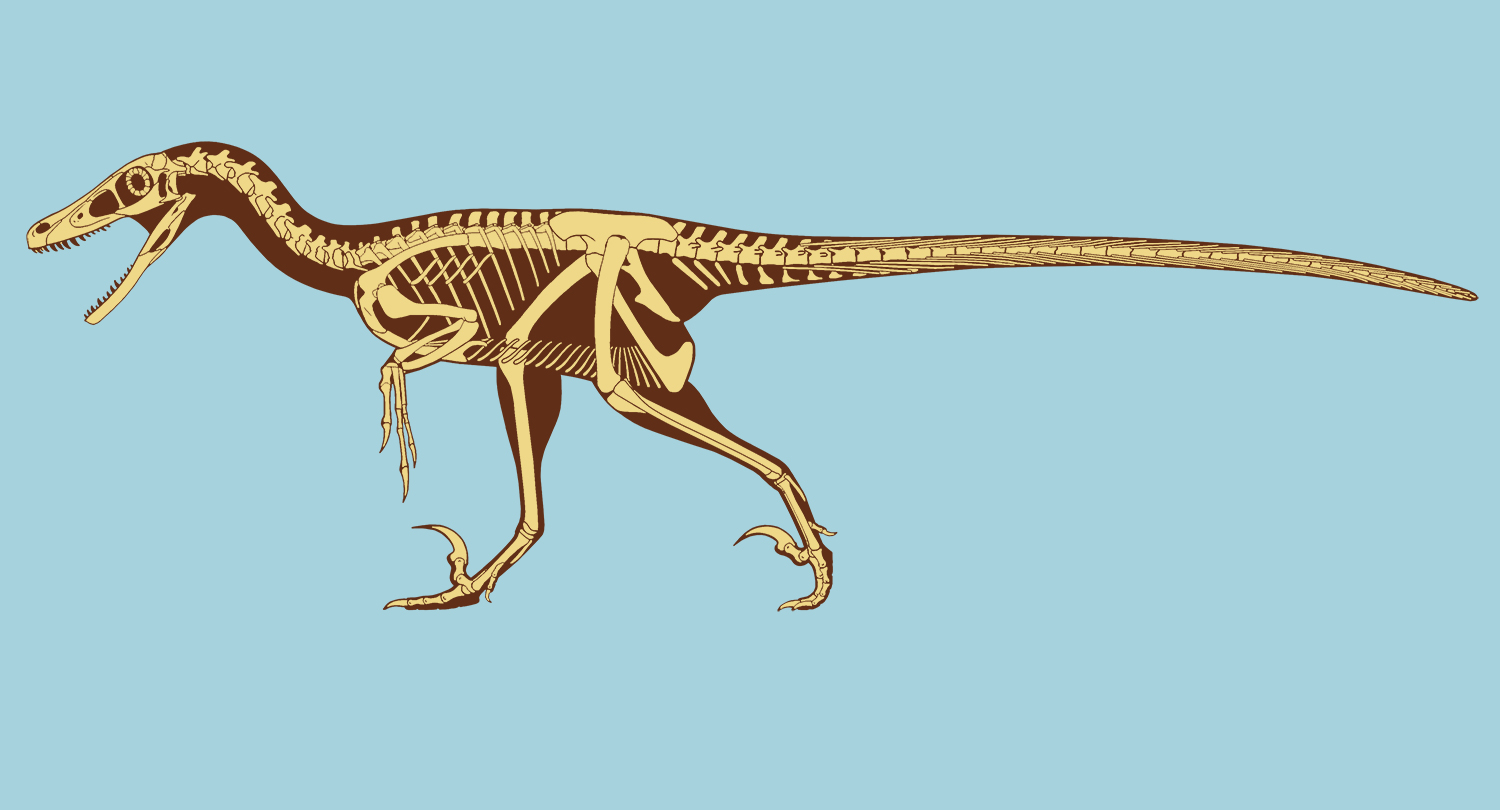
Velociraptors are today's topic. Pic from Mental Floss below of a fossilized skeleton of one. 

These guys have a meter long tail, which is half their length...and twice their height. To compare them to domestic turkeys, they're a bit shorter, a lot longer, and a lot lighter. Nothing like the almost human-sized raptors from the movies. There are suggestions that they could get up to 100 lbs and a meter tall, but that's probably not the average. The picture below is from Live Science and shows what their skeletons look like, so what we think they do. 

If you've watched the movies, you probably remember the thing about how their claws slash through you like a razor and how deadly they are. Well, a test got done and...nope. Their claws were probably so they could grip onto things instead of slicing. They're too small to have caused as much damage as you think. Deinonychus, on the other hand, has the larger claw you're thinking of, and could be that deadly. They also kept it in the air when they walked, to make sure it stayed sharp. 

There was also a lot of talk about the velociraptors hunting in packs...again, nope. No evidence so far. Again, that's the Deinonychus. All fossils of velociraptors have been pretty solitary. 

And, to fully destroy your image of them...there was a site found with evidence that a velociraptor was killed during combat with a sheep sized herbivore before the pair were killed by a sand dune or something falling on them, which means we don't know who would have won, but still. Those dinos you were so afraid of from the movies couldn't take down a sheep-sized protoceratops. Picture below from Live Science to show what one artist thinks it could possibly have looked like. 

You probably already knew this one-- they're feathered. They probably looked more like an eagle than anything, but I kinda adore imagining them looking more like some the truly ridiculous birds of the world. We do know they couldn't fly though, in case you were curious about that one. So maybe more like kakapo. Except, they do have a very long tail that is inflexible, so sticks out all the time, unlike a monkey tail, so...something else. How about this guy, from a list of birds with long tails? The White-Bellied Go-Away Bird, A-Z animals. He looks cool. I'm going to have to write about him some other time. 


So, now that I've destroyed Velociraptors for you, I hope you have fun and I'll see you soon. 


Sources:

Mental Floss- 10 Swift Velociraptor Facts

Tyrannostorus-- Velociraptors

Live Science- Velociraptor Facts

Fun Kids Live-- Velociraptor Facts

Science Focus-- The Scary Truth about Velociraptors

Thought Co-- Velociraptor Facts

Natural History Museum-- Velociraptor Facts

Natural History Museum-- Velociraptor Fact Sheet

Dinosaur Pictures-- Velociraptor

A-Z Animals, birds with long tails

Husband Calling Contest

 Hi. Just got informed of the existence of this and it should surprise absolutely no one that I feel the need to post about it immediately. ...