Tuesday, May 20, 2025

Gee's Golden Langur

 Also known as Golden Leaf Monkeys or just Golden Langur, this is an endangered old world monkey that lives in a tiny area of Bhutan and India, where they are considered a sign of good luck. 

Picture from New England Primate Conservancy, link below. 

These guys are primarily leaf eaters, but they seem willing to eat whatever they can get their hands on, like fruit, flowers, insects, snails, and farm crops, among other things. The picture below is from the Discover Wildlife link in the sources section, which is actually an article talking about them raiding farms, so that's rather appropriate here. 

Despite what you might think, these guys actually got named after a naturalist that first brought them to the attention of the rest of the world. E. P. Gee. I find this name hilarious for reasons I'm not sure I want to go into, and I was very surprised that this was actually a name instead of them using a native name or something. 

Again, from the New England Primate Conservancy link below. 

There isn't a lot known about these guys because they only got really noticed recently, in the 1950's, and they're rather shy. Plus, their numbers are decreasing, so it's hard to find them for study in the wild. 

One of the things that is rather amusing about Gee's Golden Langur is that they're another one of those species that has had their scientific name shuffled about a bit as scientists tried to figure out what group they fit in best, ending on the family of Langurs. 

The thing that brought them to my attention was a search for a golden monkey name for this little one. 


Yeah, he looks a lot like his brother Sifaka, but this is Langur. He's adorable and cuddly, but a bit less sure of himself than Sifaka. Surely you can see the similarity between the monkeys and my kitten? 

Either way, I hope you enjoyed seeing these cool pictures of a really cool monkey, and I hope you'll enjoy seeing whatever I come up with next. If you want to know more about the monkeys, there are links below that have a lot of awesome information. Thanks for reading, I'll see you again soon. 


Sources:

New England Primate Conservancy-- Gee's Golden Langur 

iNaturalist-- Gee's Golden Langur

Animalia-- Gee's Golden Langur

Madras Courier-- Gee's Golden Langur, World's Rarest Primate

Animal Diversity Web-- Golden Langur

Earth's Endangered Creatures-- Golden Langur

Palm Oil Detectives-- Golden Langur

Discover Wildlife-- Endangered Monkeys Raiding Farms

Creatures of the world Wiki-- Golden Langurs

Sunday, May 18, 2025

Sifaka

Sifakas are lemurs, named for the call they make in the forests of Madagascar. They're known for their strange way of jumping from tree to tree, staying upright but still managing to cover 30 feet of air-time. Pretty impressive when you consider that they're only about 3 feet long. 

There are 9 known species of Sifakas, including the Silky Sifaka, which is sometimes called the Angel of the Forest. The picture below is from the Lemur Conservation Foundation link below. 


This one is a Coqerel's Sifaka, from the New England Primate Conservancy. 


And this is my Sifaka, just in case you were curious why I brought this up. 


That's why I decided to write about them. Since Mo is Monkey, her babies are Monkeys too. This little one became Sifaka. 

Sifakas, as Lemurs, spend pretty much all their time in the trees, not on land much, but they're rather recognizable on the ground because they walk bipedally, and their walk is often compared to dancing or skipping. The picture below is from the Duke University link, and shows their interesting walk at least a bit. 


These guys eat a lot of fruits, nuts, berries, and leaves, which is a bit different from most Lemurs. The leaves are hard for them to digest, like they are for a lot of animals, so their digestive system is pretty long, to allow for them to handle their fibrous diet and get all the nutrition from it they can. While this is great in the wild, it can cause a few problems in zoos and whatnot if they don't have enough variety. 

These guys aren't nearly as populous as anyone would like, but people are trying to help repopulate them through conserving their territory, or through careful breeding programs. Hopefully, they'll be around for a long time coming. Either way though, they're cute enough that they got another cutie named after them...and it has nothing to do with me wanting something that can sound insulting for when they're slow on learning litterbox-training and pee somewhere they shouldn't. They're orange, we have to give them some leeway for when they aren't in possession of the single orange cat braincell.

I'll see you guys later to tell you about my other adorable babies. Have fun, and let me know if you need more pictures of cute kitties. I have a ton. 

Friday, May 16, 2025

Wobbegong

 This actually covers 12 different species of shark, but I'm going to mostly refer to the group, also known as Carpet Sharks, as a whole mostly. I just couldn't pick a single one to focus on. 

So, first thing- Wobbegong is from an Aboriginal word meaning 'shaggy beard', which is...appropriate. You can see that from the pic below, which is from the Meridian Adventure link below. Despite what you'll probably think at first, that is actually a picture of a shark. 

They're also called Carpet Sharks because they have flattened bodies and tend to hang around the ocean floor and pretend to not be there. They also have highly decorated bodies that tend to be what leads to their other names-- like Tasseled, which sounds a lot like a carpeting term, and Floral Banded. I want it stated for the record that I've never really considered that any shark could be considered 'floral'. There's also an Ornate Wobbegong, which is another thing I hadn't thought a shark could be described as. 


Picture from Fact-Animal, link below. 

These guys are generally only about 4 feet long, but they might be able to grow up to 12 feet long, and they don't move a lot. Unlike most sharks, they don't need to keep swimming to breathe. These guys evolved to be able to lay in wait for their prey. They also evolved the ability to dislocate their jaws so they can eat things almost as large as they are. If they do come across something larger though, they might just grab it and hold on until it dies, then munch as they are able. Usually though, most of their food is smaller and they basically suck it in and swallow it whole. 

Ocean Earth Travels link below gave me this picture. It doesn't specify which Wobbegong species this is. 

Before I close out, I have something else to add that means this weird and wonderful creature is also murderous somehow. They live around Australia, the place where everything wants to kill you. That means, as cool as these guys are, they should be treated with caution. 

Either way though, aren't these guys cool? The links below can tell you more about them if you want. I hope you liked learning about them as much as I liked writing this up about them. Thanks for your time, I'll see you soon. 

Wednesday, May 14, 2025

Papicolist

Definition: A person who worships a pope. 

Seemed appropriate considering everything happening recently, with the death of a pope and election of a new pope. 

I do want to throw a second part onto this though. 

The guy who lives at the Vatican? He doesn't have the title of Pope. It's from the word Papa, meaning Father, which got shifted a bit into Pope. On the other hand, the Coptic Church has a guy in the lead who has the title of Pope. So if anyone asks you if the Pope's Catholic? Nope. The guy is Coptic. Have fun with explaining that to someone. 

I'll see you again soon, with something else interesting. 


Sources:

OED-- Papicolist

Taylor Marshall-- Papicolist-- a religious website with a lot of info if you want it

Collins Dictionary-- Papicolist


uCatholic-- The Pope's Actual Title

St. Shenouda Monastery-- The title of the leader of the Coptic Church


Monday, May 12, 2025

National Limerick Day

 I'm getting really annoyed at myself for disappearing on you again. I'm starting to consider posting more than once a day sometimes to make up for not posting on other days. This time isn't entirely my fault though, since my internet kinda died for the last 10 days and it's hard to write a post about stuff when I can't look anything up or load pictures or anything like that. 

But, for today, I've got a post for you about National Limerick Day, and that sounds hilarious to talk about for me. 

It's one of the more recognizable forms of poetry, one that most people can recognize even if they don't know many of them. They're usually...interesting commentaries about a girl from Nantucket, or someone from Kent, in public knowledge. The form is 5 lines long, with a rhyme pattern of A-A-B-B-A, and usually rather humorous, though it isn't a requirement. 

This is taken from the King Of Limericks link below. He's got a lot of limericks on his site. If you're interested, go for it. 

Today got chosen for this because it's the birthday of Edward Lear, who spent a long time writing a lot of limericks in the 1800's. They weren't called that then, but the form is still very recognizable in his works. 


To close this out, I've got sources below of the history of a limerick, just a bit, and a few links to a list of limericks, if you're interested. As a final thing, before the sources for you though, is this. My favorite limerick:

A funny old bird is the pelican, 

His beak holds more than his belly-can,

He can hold in his beak,

enough food for a week,

and I'll be damned if I know how the heli-can.  


Sources:

National Day Calendar, May 12

Days of the Year-- Limerick Day

Smithsonian Institute Archives-- Happy National Limerick Day (There's a kinda funny limerick here from a Smithsonian worker that's getting in on the fun of the holiday.)

The Poetry Foundation-- Limericks, a list of them

King of Limericks-- 14 of the most famous

Poets.Org-- Limericks

Thursday, May 1, 2025

Gnathonize

To flatter someone. 

Butt-kisser. 

One of my joys in life is coming up with old or obscure words to describe people with. I tend to forget them pretty quickly because I'm anti-social enough that I don't encounter the need for them often, but that's a different issue. I like to imagine using this word against someone though. I hope you'll tell me if you ever use it, and how it turns out. 


Sources:

Quora--Daily Dose of Vocabulary-- Gnathonize

An English Dictionary of Old English Terms

Mental Floss-- 50 Verbose Verbs to Drop Into Conversation

OED-- Gnathonize

Tuesday, April 29, 2025

Ailurophobia

 This is the post I was waiting to make. 

Ailurophobia; a fear of cats. 

People with this phobia, please stop now. 

People without the phobia...

This is Mo. She's my silly kitty. When she was born, her mom styled her hair into a mohawk, which she got named after. Then she started climbing everything and was either 'Mountain Climber', or 'Monkey', and now she has a new Mo name. 


Mo is now a Momma. 

The reason I held off on this post was that I wanted to wait for her babies to be born so I could ask...how could someone be scared of this? 


That should be enough pictures for most of you. If you need more, please let me know and I'll send you more. Especially as they get older. And there might be some cat themed posts for a while. Any chance I can get to share the adorableness...until someone objects.  


Sources:

Sally Lightfoot

 Bet you thought I was going to tell you about a human. Nah. They're interesting, but there are also a lot of depressing ones that I'd rather not think about right now, so instead you get this. A very colorful crab. That's better, I think. 

    This image is from the Metropolitan Touring link below. 

This crab is only a few inches across, and rather common, so you can see them in the Galapagos and on the western coasts of Central and South America if you want. 

This crab was supposedly named for a dancer, because it's so lightfooted and moves with grace...which, depending on your opinion, could be more than most crabs do. Personally, I like their scientific name a bit more. Grapsus Grapsus. That's pretty perfect for a crab that comes with warnings of their pinching plans. 

Pic from iNaturalist below. 

They're also pretty fast, and have legs that are really strong specifically so they can withstand the waves they have to deal with in the water. They also keep some of that water in their shells so they can breathe on land and be out of the water for longer. They'll eat anything, so they clean up a lot of things that other animals do in other parts of the world. An interesting thing that they eat is the bugs off Marine Iguanas, which is a kinda-symbiotic relationship. The final interesting thing to say about them is that, despite having a lot of predators around, they don't camouflage themselves. They actually get more colorful as they get older, which is weird evolutionarily. 

Pic from iNaturalist again. 

These guys are mostly interesting because of their colors, but they're still really cool. I hope you enjoyed learning about them, and I'll find something else fun to tell you about soon. 


Summary:

Galapagos Conservation-- Sally Lightfoot

Animal Diversity Web-- Grapsus Grapsus

Metropolitan Touring-- Sally Lightfoot

iNaturalist-- Sally Lightfoot

Quasarex-- Sally Lightfoot Crab

Everywhere Wild-- Sally Lightfoot

Peaks and Penguins-- Sally Lightfoot

Saturday, April 26, 2025

Saint Isidore Of Seville, Patron Saint of The Internet. Ish.

Hi, sorry for disappearing for a few days. The weather decided to shift on me suddenly from weak sunlight that isn't much of a problem for me, to strong sunlight that knocks me on my butt in 10 minutes. Plus, now it's dry enough to start weeding the flowerbeds and working on a vegetable garden, which means a lot more time outside, which I hate. Plus, internet's been iffy and I keep getting distracted from things, so I tend to wander off and forget to wander back when the internet goes out. 

So, there are some who object to calling Isidore the patron saint of the internet or computer users, so you might get objections if you go to a catholic church or something. 

Quick note for anyone that isn't catholic or doesn't know much about Catholicism. I'm not catholic, or even particularly religious, so I don't know all the rules, and I don't like the religion enough to look into things any more than I really have to. But, the patron saint thing is sort of like a patron god thing, where they are particularly protective of a particular subset, like taxi drivers. It used to be that a blacksmith would pray to a patron god of blacksmiths. Patron saints are similar, and you'd pray to one that has some kind of power in the realm you want, like praying to the patron saint of lost things, Saint Anthony of Padua, when you need some help finding something you lost. 

St. Isidore of Seville, from the Franciscan Media link below. 

This lovely man was named the patron saint of the internet because he started schools and tried to write down all the knowledge in the world, something that several others have done, and wanted to share all information with everyone. He required seminaries to be built, which is basically the school to become a priest. Included in his list of books he wrote is a history of the world, a history of Goths, a dictionary, and an encyclopedia, plus a bunch of things for his religious work. He wanted to make the information available for everyone, and let people be able to look things up. One of the things that is really awesome about him is that he referenced older writers, and we would have no idea what they said if he hadn't written it up for us. 

Interestingly, Etymology is actually a word he coined, which he used to name a series of books that he wrote, 20 volumes containing the entire world's knowledge, as far as he knew. 

In 1997, Pope John Paul II named Isidore of Seville as the patron saint of the internet, though it's still a bit debated. Personally, I'm good with this. 

I'm going to avoid most of the rest because there's a lot of history that I don't consider too important, and a lot of church politics that I'm going to ignore too. Before anyone claims I'm against religion, I'm not. I like the theory of it just fine. I just have trouble understanding the human element of it and not getting grumpy when a peaceful religion gets twisted to war because of greed or some other form of stupidity. I prefer to avoid religion because then I don't insult people as much. 


Sources:

University of Portland-- Patron Saint of the Internet

Franciscan Media-- Saint Isidore

The Conversation-- Isidore of Seville

Knights of the Holy Eucharist-- Patron Saint of the Internet (This also has a prayer for him, if you need it.)

Father Matthew P Schneider-- Isidore is not the Patron of the internet

Catholicism.Org-- Patron Saint for the Internet

My Catholic Life-- Saint Isidore

Monday, April 21, 2025

Eunoia

Hi. Sorry for not posting yesterday, but nothing wanted to load for some reason. It's not loading well right now either, so I have fewer sources than I'd like. Also, I have a planned post, but it needs to wait until something happens before I can do it, and it hasn't happened yet.

So, instead, let's talk about Eunoia. Before it's lovely definition, it's the shortest word in the English Language that includes all of the vowels. When translated, it means 'Beautiful Thinking' or 'Good Spirit'. 

The definition is basically a feeling of goodwill, especially between a speaker and the audience. Such as the goodwill I feel towards you, the reader of my blog, and the way I hope that this will make you smile, or the goodwill you feel towards me that means you'll trust that I'm not lying to you about what I'm saying.

Hopefully, I'll be back soon with my planned post, which I somehow think you'll be happy to see. If you want to know more about the word and how to use it, be warned that there is a book by the same name running around, which means that not all the links you find might be about the word. 

Either way though, thanks for reading. 


Summary

Cambridge Dictionary-- Eunoia

Philosophy Stack Exchange on Eunoia

Your Dictionary- Eunoia

Friday, April 18, 2025

Velociraptor

Today is National Velociraptor Awareness Day, so I celebrated it, as much I could, by eating chicken (the closest to velociraptor I was going to get, but also probably something it would have gone after if it was still around) and watching the Jurassic Park movies. I'm actually currently watching the end of number 2 right now, as I type this. 

All that aside though, I'm going to tell you about Velociraptors and why everyone is wrong about them if they watched the movie. 

Those are Utahraptors, or Deinonychus. Velociraptors are a lot smaller and could probably be punted around by a particularly enthusiastic human if necessary. The others are bigger, and more likely to be able to take on a human. But, I'll talk about them some other time. 

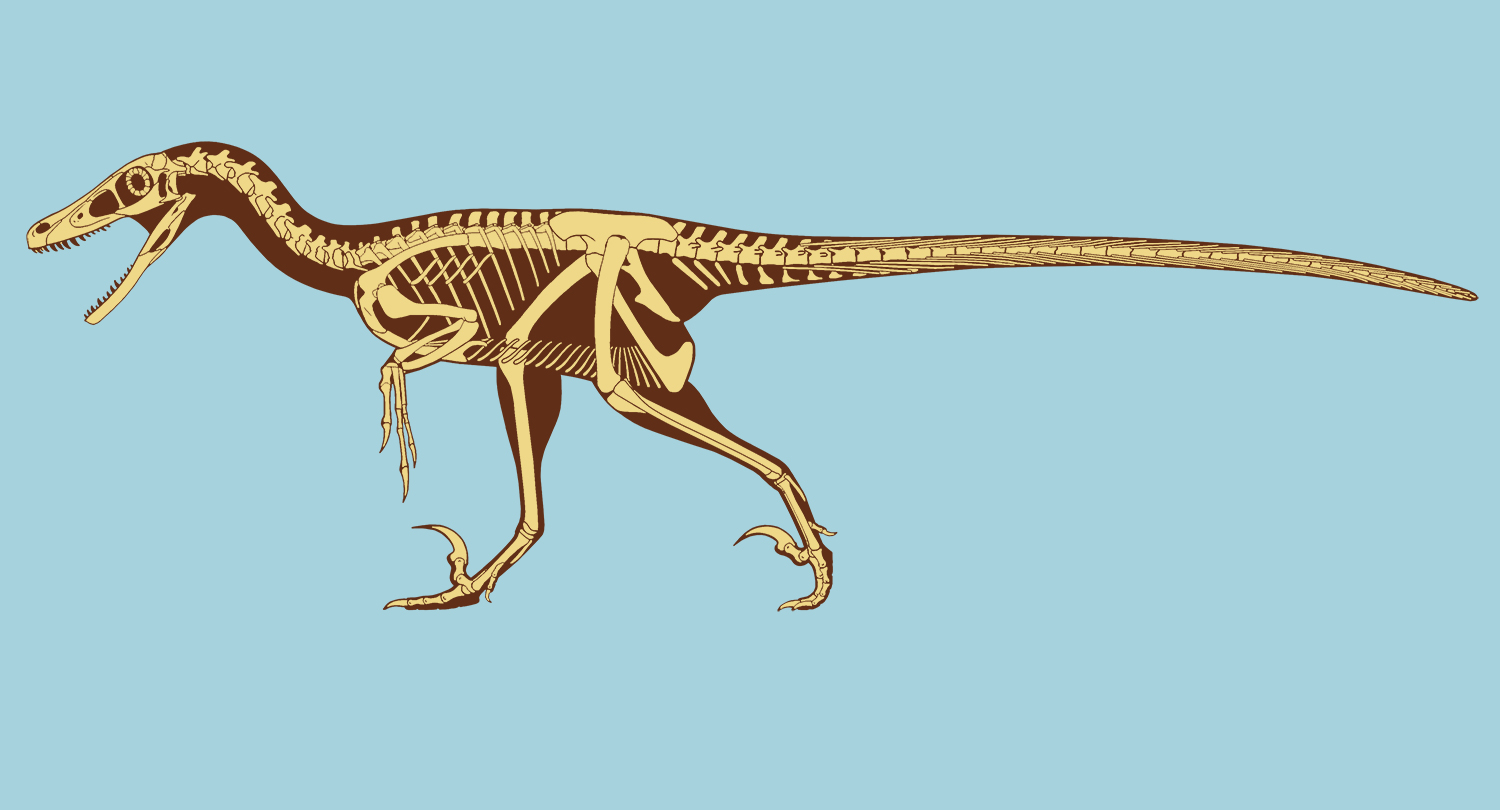
Velociraptors are today's topic. Pic from Mental Floss below of a fossilized skeleton of one. 

These guys have a meter long tail, which is half their length...and twice their height. To compare them to domestic turkeys, they're a bit shorter, a lot longer, and a lot lighter. Nothing like the almost human-sized raptors from the movies. There are suggestions that they could get up to 100 lbs and a meter tall, but that's probably not the average. The picture below is from Live Science and shows what their skeletons look like, so what we think they do. 

If you've watched the movies, you probably remember the thing about how their claws slash through you like a razor and how deadly they are. Well, a test got done and...nope. Their claws were probably so they could grip onto things instead of slicing. They're too small to have caused as much damage as you think. Deinonychus, on the other hand, has the larger claw you're thinking of, and could be that deadly. They also kept it in the air when they walked, to make sure it stayed sharp. 

There was also a lot of talk about the velociraptors hunting in packs...again, nope. No evidence so far. Again, that's the Deinonychus. All fossils of velociraptors have been pretty solitary. 

And, to fully destroy your image of them...there was a site found with evidence that a velociraptor was killed during combat with a sheep sized herbivore before the pair were killed by a sand dune or something falling on them, which means we don't know who would have won, but still. Those dinos you were so afraid of from the movies couldn't take down a sheep-sized protoceratops. Picture below from Live Science to show what one artist thinks it could possibly have looked like. 

You probably already knew this one-- they're feathered. They probably looked more like an eagle than anything, but I kinda adore imagining them looking more like some the truly ridiculous birds of the world. We do know they couldn't fly though, in case you were curious about that one. So maybe more like kakapo. Except, they do have a very long tail that is inflexible, so sticks out all the time, unlike a monkey tail, so...something else. How about this guy, from a list of birds with long tails? The White-Bellied Go-Away Bird, A-Z animals. He looks cool. I'm going to have to write about him some other time. 


So, now that I've destroyed Velociraptors for you, I hope you have fun and I'll see you soon. 


Sources:

Mental Floss- 10 Swift Velociraptor Facts

Tyrannostorus-- Velociraptors

Live Science- Velociraptor Facts

Fun Kids Live-- Velociraptor Facts

Science Focus-- The Scary Truth about Velociraptors

Thought Co-- Velociraptor Facts

Natural History Museum-- Velociraptor Facts

Natural History Museum-- Velociraptor Fact Sheet

Dinosaur Pictures-- Velociraptor

A-Z Animals, birds with long tails

Thursday, April 17, 2025

The Color Of the Universe

 The average color of the Universe is a shade of off-white beige that has been named 'Cosmic Latte'. Personally, I think it's lighter than most lattes, but I don't tend to drink too many of those, so what do I know. 

Pic from Phys.org below. 

Before you start thinking that I'm insane (more so than usual, at least (I do not claim to be entirely sane, so don't worry if you were wondering about my sanity)), it was actually decided after a study in 2002 where Astronomers recorded the light from the universe that reaches them and averaged it out. It's a more tan white because of more red and yellow than blue. 

If you add in the 'blackness of space' though, it does become an off-black color instead, but that is just because of the lack of light from so many places. Adding up the light is what they did, for what they think you'd be able to see if you could somehow stand outside the universe and look at it. 

Other names that got several votes when they were tallying it up were 'Big Bang Beige' and 'Primordial Clam Chowder'. It has been suggested that Cosmic Latte won because of the caffeine bias that most scientists have. 

So, next time you have to deal with paint chips for an off-white room and you want to strangle someone because white is white and what does it matter if it's eggshell or ivory?!, suggest that they color it after the universe and go get yourself some coffee. 

And, I plan to post tomorrow, but if I don't, I hope you have a happy National Velociraptor Awareness Day. I plan to eat chicken, since it's the closest to a velociraptor I can get and totally something they'd eat if they were around, and watch Jurassic Park. I had considered getting those dino-nuggets, but those taste weird. 

Either way, seeya soon and have fun. 


Sources:

BBC Science Focus-- Color of the Universe

John Hopkins' News Releases-- Correcting previous, incorrect, announcement of the Universe's color

Life Science-- What Color Is The Universe

The Cosmic Spectrum!- The scientific explanation

Phys.Org-- The Color of the Universe

Tuesday, April 15, 2025

Marine Iguana

I don't feel drunk, but I just spelled iguana with a q instead of a g and Google had to tell me I got it wrong. Obviously, I disconnected my brain somehow. 

These guys are also extremely unique, and they share a few traits with the Hoatzin, so they seem to be fitting for the next post. 

Marine Iguanas are from the Galapagos, and are sometimes called Christmas Lizards because of their coloring. Pic from Padi, below, to show why. Their colors only look like this during mating season though, from January to April depending on the island. 

What makes them really unique though, is that they swim. 

Pic from Padi, below.

It's not just them crossing streams or something, they go into the ocean and dive down for seaweed to eat. They're the only seagoing lizard known to science so far. Before you start thinking about crocodiles or something though, lizards and crocs are both reptiles, but they're separate groups within the reptile grouping. So, crocs aren't lizards. 

Interestingly, these guys tend to spend the mornings sunning themselves to warm up so that they don't get too cold when they go into the ocean later. Their main food is seaweed, so they have to get to the deeper water and dive down 30 feet to get to the larger concentrations of greenery, which they gnaw on with their teeth. Their blunt noses helps get better angles to scape their teeth, and they use their claws to cling to the rocks so they don't get knocked away. They don't have gills, so they just have to hold their breath. Since this is their evolutionary choice, they can hold their breaths for a while, up to 60 minutes sometimes. 

Since that might not be too interesting to you since a lot of people can go swimming for an hour, how about this? They keep ending up with toxic amounts of sodium in them, so they evolved to get rid of it without having to lose a lot of water with it. They sneeze it out. They sneeze salt. That is just...weird and hilarious. 

Marine iguanas have been around for a very long time, so they're kinda like tiny dinosaurs, and they are partially the inspiration for a certain lizard that pretty much everyone knows. Godzilla. There are a lot of other possible inspirations, but this is one of them. 

Like how the Hoatzin, among so many others, has had trouble being listed out taxonomically, it's only recently (comparatively at least) been realized that there are at least 5 subspecies of the Marine Iguanas. Fittingly, the Darwin Foundation is the one that I got the article from, link below. Another article says 7 types, and a third said 11, so we'll leave that be. Awesomely, one is called a Godzilla Marine Iguana. 

As a final thing, when food is scarce, they can literally shrink by as much as 20%. That means they don't have to worry about getting as much food to survive. 

There are other interesting things to learn about them, but I'll leave that to you. They're cool, and there are a lot of really awesome pictures of them to see. I'll come back soon to tell you about something else that will hopefully be just as cool, if in a different way. 


Sources:

Nat Hab-- Marine Iguanas

Padi- Marine Iguanas

Latin Roots Travel-- Marine Iguana

Darwin Foundation-- 5 subspecies of Marine Iguana

Galapagos.com-- Marine Iguana

Vanderbilt Museum-- Marine Iguana--Take with Grain of Salt

Animal Diversity Web-- Marine Iguana

World Wildlife-- Marine Iguana

National Geographic-- Marine Iguana

Galapagos Conservation-- Marine Iguana

Oceana-- Marine Iguana

Happy Gingo-- Galapagos Marine Iguanas


Monday, April 14, 2025

Hoatzin

I'd apologize for not posting for the last few days, but the internet at my house has been bouncing between being very good and barely there, so I forgot about this while trying to make sure I wouldn't lose my Duolingo streak and check emails and I've actually been baking up a ton of things the last few days too. Stress baking that the internet wasn't working with me, then sore and tired enough I forgot. 

For today, we're going to talk about the Hoatzin. This Amazonian bird is more than a little bit wonky, and has confounded scientists several times. Before I explain why that is, I'll show you why I called them wonky, with a picture from the Rainforest Expeditions link below. 


I hope you can understand why I said wonky. 

Now for why they confound people. When making up the 'family trees' of birds, there are a lot of things that get considered for who is part of what family. The Hoatzin is the only one of it's family. That's not entirely unique among the animal world, and I think I've mentioned that about a few animals before, but it still is something that scientists have to work hard on. DNA testing has been around for about 45 years, give or take, but there is a lot of DNA in each test, and a lot of animals to get tested, so there's been a lot of reshuffling as things get tested but no one is waiting for the tests to try to figure things out. The point here though, is that the Hoatzin got tested and they're the only one of their family still alive. It doesn't have sibling-species, just cousins or second-cousins. 

Beyond that though, here's some of how ridiculous they are: the chicks have claws on the tips of their wings, something that's a holdover from archeopteryx ancestors, and those babies can swim and will dive into the water to escape predators. The adult's stomachs are also strangely similar to that of cows and other ruminants, with a fermentation process happening to the leaves they eat. It's led to them being a bit gassy, but they manage it fine. The leaves are another unusual thing about them, because very few birds eat leaves, especially as their main food. They're really stinky, often called 'stink birds' or 'skunk birds' because they smell like cow manure, which makes sense since their digestive system and diet are similar to that of cows and their digestion causes methane gas to build up and be burped out. Their digestion actually weighs a good chunk more for them than it does for other birds, so they don't really fly much more than a chicken, even though they make nests up in the trees. 

You can understand why this weird, weird bird is not closely related to any other birds, and why they couldn't figure out where to put it on the family tree. It might actually be closer related to a goat than a robin, but don't quote me on that. 


That picture is from the Rainforest Expeditions link too. I like their pictures. They seem brighter than the others somehow. 

One thing that you might get a kick out of-- the family name for these guys, Opisthocomus, means 'wearing long hair behind', and refers to their crest. When I found that out, I couldn't help but think of a mullet. These guys aren't exactly mullet wearers, but that's a bit of a dinosaur of a hairstyle, so...*Shrugs*

Altogether, these guys are unusual and weird and wonky, and I kinda love them but never want to actually meet them, both because they're stinky and if I get a vacation, I'm not going somewhere with more mosquitoes than I currently have to deal with. Either way though, I hope you liked learning about them and now you have something funny to tell people around you, and you can probably get 5 bucks off someone by making a bet about if there are any birds that digest things like cows. Good luck with you if you're going to try that. 


Sources:

Animal Diversity Web-- Hoatzin

Encyclopedia Britannica-- Hoatzin

Wild Latitudes- Hoatzin

eBird- Hoatzin

Audubon--Hoatzin

Fact Animal-- Hoatzin

Rainforest Expeditions-- 3 odd facts about Hoatzins

San Francisco Zoo-- Hoatzin

Friday, April 11, 2025

Wilhelm Scream

 Before you continue any further in this, I do want to warn you. This might make you giggle in the middle of a horror movie or something. Once you know this and start recognizing it in other life, you might be unable to take things seriously as much anymore. It's happened to me several times. 

Since you've apparently decided to continue, please keep the warning in mind and don't blame me if you start thinking about it. 


 That scream, known as the Wilhelm Scream, has been part of a lot of movies over the last 75 years. It's a well known sound effect that is possibly one of the most-used in the industry. It's also strangely hilarious once you know about it and start listening for it. It got named as the 'Wilhelm Scream' in the 70's, when some film students were sifting through sound effects from Warner Bros and used it in their projects, using the name of one of the characters that used the scream in 1953. Those film students then went on to use it in their directing careers after they graduated, including Indiana Jones and Star Wars, among a lot of other movies. 

Through the 80's and 90's, it became pretty popular and sometimes considered either a 'rite of passage' or an in-joke for sound engineers, then in 2010, when the Hollywood Museum of Sound came around and started making a list of the movies more, then everyone started using it-- movies, tv shows, video games, and even some commercials. 

It's a giant in-joke and comedic effect to a lot of people because once you know that this same scream is what gets done in Toy Story and Indiana Jones and Resident Evil, among other things, it becomes something to laugh at no matter how dramatic the scene is. That's why I provided warning above. You might laugh at inappropriate times because it's so hilarious now. 

Now that you know, I hope you'll be amused by it and you'll sound like an expert when you have to explain why Kill Bill makes you giggle. Let me know if that actually happens and how it goes. 


Sources:

Video/Audio of Wilhelm Scream from Youtube

Wikilist-- List of Films with the Wilhelm Scream, not complete

Sound Effects Fandom Wiki-- Wilhelm Scream

Kennedy Center- Sound Design and the Wilhelm Scream

Backstage- History of the Wilhelm Scream

Hollywood Lost and Found-- Wilhelm Scream Usage List up to 2010

LAist- The Original Wilhelm Scream

On Advertising-- The Wilhelm Scream

Video Maker-- The Wilhelm Scream

The ScriptLab-- Wilhelm Scream

Thursday, April 10, 2025

The Diagram Prize for Oddest Book Title

 If you've spent much time around a library or a bookstore, you've probably come across a book or three that made you check twice for if the title is what you thought it was. I know I've had a few of those. 

I didn't know that there was a prize for it though. 

Apparently there is. 

The first one was in 1978,  Proceedings of the Second International Workshop on Nude Mice. If that isn't strange enough, there were also titles like, in 1993, American Bottom Archaeology, and this one, from the Bookseller link below. 


I absolutely didn't expect this to exist, and I'm not sure about the picture there. 

There's also How to Dungeon Master Parenting, and Killing the Buddha on the Appalachian Trail, or Is Superman Circumcised?: The Complete Jewish History of the World’s Greatest Hero. The last one, apparently the author said that they were happy to get the prize and were surprised to be picked because the competition was a bit stiff. Yes, puns. Sorry. 

The links below have some more of these odd titles, especially the Goodreads article. I have a feeling that this prize is something to keep an eye on because it's definitely interesting. 

Thanks for reading, sorry for disappearing for almost a week, and I'll be back soon, I think. 

Friday, April 4, 2025

Half Life Of Knowledge

I feel like I should have posted about this before, but I hadn't thought of it. This one is going to have some opinions in it that you might object to, for which I'll apologize if they do offend you, but they're relevant and required. 

To start the explanation, let's make sure you know what a Half-Life is. It's most commonly used as a scientific term in relation to radioactive materials. There is no way to know when a single atom of a radioactive element, like plutonium, will become inert, safe. On the other hand though, we know about how long it will take for half the atoms in a lump to become safe. The Half-Life is basically the time period until 50% of the plutonium will be safe. A second time period later, only 25% of the total plutonium will remain, then 12.5%, and so on. 

They also use this in medications, how long it will take for a drug to be absorbed into your body and how long for it to leave your system can also be measured in half-lives. It's how they know how often you need to take medication, so instead of just taking an entire bottle at once and being good forever, you take one pill 3 times a day or something. 

Now that you understand a half-life at least a bit, we'll move on to the half-life of facts. 

The actual number here depends on a lot of things, such as what you're counting in the set of 'knowledge'. The people doing a study about this basically set things into one of three different groups:

1. Things that are always true and have been true and are extremely unlikely to change. For example, humans have 5 fingers. This isn't likely to suddenly change anytime soon. 

2. Things that are always changing, like what time it is or what you're doing. Those are 'facts' that are always going to change. 

3. The middle ground. Things that we haven't always known but we think we know now. Like, DNA. We knew it existed, but not what shape, then we did. We knew what it looked like, but for a while, we didn't know how many chromosomes we had. Then we assumed that all life had the same, but it's different. We assume a lot because we think things match even if we shouldn't, like the number of chromosomes in humans and pigs, or because we make rules of the universe that are proved wrong when we discover something new-- like the belief that the world was flat, until we proved it was round. 

Facts in the first group are unlikely to change and their half life is...never. 

Facts in the second are rarely correct multiple times, so the half life is pretty small. 

Facts in the third group...are what I'm mostly talking about with this. 

A little bit of a subject change. 

In the 1990's, a few scholars guessed that knowledge had doubled in the last 25 years, and at least some of those things meant that what they'd known before was wrong. By their count, it took 50 years before that to get to the same point, so it was growing faster. 

By current studies, it depends on what subject you're looking into and how advanced in it you're looking, but facts have a half-life of about 5 years before half of the information will be wrong. This is part of why textbooks have to be reprinted. It's not just about new things being discovered, it's also about old things being changed or discovered to be false. 

Before you start freaking out, this 'half-life' doesn't mean as much as it might sound. It means that half of the facts have changed, but there is no guarantee that it's the half that you remember, the half that is important right now, or even the half that you learned in the first place. You can read the dictionary and the half that could change in a decade could be 10% no longer being used, 10% new words being added, 10% new information about the history of words, and 20% changing definitions by adding slang meanings or new forms of words. You still know a lot of the words, you picked up a lot of the new ones in life, and you can still figure out what's going on, but it's shifted a lot. Then again, a lot of what might have changed could be a bunch of words you never bothered to read about leaving the book, so you might not notice the change at all. 

What it boils down to is that things change and what is fact one day can easily be wrong the next because humanity as a whole is always adding to our body of knowledge. 

Here's my opinion, so feel free to skip over it. Some idiots think that, because knowledge is shifting and changes, it means that Science can be ignored because it doesn't know what it's talking about. Things may change, but that doesn't mean you should ignore it all. Especially not the parts that haven't been proven wrong yet. Fine, ignore the new stuff until it's been studied a bit more, a lot of people wait for double-checking, but don't assume that just because a new study has proven something else wrong, means that everything is wrong. Do not assume that because they got things wrong about what family group a flower is in, that they also got it wrong that having it in a tea doesn't help your headaches any more than a placebo. They might not have known that dinosaurs had feathers, but they definitely knew they existed and a long time before humanity. A random dude might have decided that humanity started in the Caucus mountains, thus Caucasian, but that doesn't mean that it's wrong that they started in Africa. Especially when the new idea comes with a lot of new proof. 

Feel free to doubt things that don't have a lot of proof yet, but please do not assume that everything is wrong just because science changes. They actually admit it, so it's one heck of a lot better than a lot of other parts of human life where they don't want to admit to being wrong or would rather double-down on a wrong idea. 

Please. 

Opinion part two; Your elders deserve respect and consideration, but this is one of the things that causes problems between generations because not everything that your grandparents were taught is the same for you. There is alot of new information that schools are trying to teach these days than when your grandparents went to school. There is a lot more research to consider, a lot more study done, and so on. I'm not saying they're always wrong, but don't trust everything they say. And, if you're going to tell them about this, make sure they understand that this isn't saying that everything they learned is bad now, but that what they were taught as fact might not be the same right now. When they say that there is no evidence for 'new-fangled' ideas like evolution or ecology or climate change, that might be because there was none when they looked 30 years ago, or it could just be that they didn't care to look. Either way, there is. Please look for it. I'm not saying you should do it to prove your grandparents wrong, but do it so you don't look like an idiot when you parrot their lines back to someone that might know different. 


The main reason I wanted to bring this up here is that things change. I said yesterday that Morepork is the only known owl in New Zealand other than the Barn Owls that migrated there, but there might be another that pops up and I wouldn't be surprised. Some of the articles said Morepork and Boobook owls are separate, while others said they were one species, so that's something that changed. Scientists are learning all sorts of new things, so I will be wrong sometimes. I might trust the wrong source, I might read an old article, I might misunderstand what I read. That doesn't mean I'm not trying to get you the right information, but it'll happen. If it does, please tell me so I can fix it. I just also want you to know it happens, which is actually part of why I haven't been going into exacting detail about a lot of things. Those details are what are most likely to change. 

Thanks for reading, I'm sorry for the wall of text here, but I wanted to make sure it gets said because knowledge shifts and changes and I don't like when people don't seem to understand that. Either way, I'll see you again soon, and I hope this wasn't too hard to read. 


Sources; 

National University of Singapore-- The Half-Life of Knowledge

FS-- Half Life of Knowledge

FS-- The Knowledge Project Podcast-- Samuel Arbesman, Future-proofing Your Knowledge

PubMed Central-- Does Knowledge Have A Half Life?

Times Higher Education-- Knowledge Has A Half-life

CIO- Thriving in a World Of Knowledge Half-Life

TUV Reinland Academy-- Is there a half-life of Knowledge?

Thursday, April 3, 2025

Morepork

Before you start thinking about that too much, I'm referring to the New Zealand Owl. Well, the only one that is native and still around. There are some that went extinct, but also some new Barn Owls that moved in recently, and I don't count them yet. 

Morepork Owls, also known as Ruru by natives, are called that because some people say that their call sounds like 'more pork'. They also are sometimes confused with their cousins, the Boobooks, and there are a lot of other names that have been used to describe the same owl, probably because everyone came up with a new one instead of asking if there already was one. 


This picture is from the Peregrine Fund, which is keeping an eye on them even if they're currently stable enough without additional help. 

Like pretty much any other owl, Moreporks are seen as guardians of the forest and symbolize wisdom. They're also silent hunters-- helped by special wing feathers with serrated edges. Pic below is from Kohab. 


These guys are one of the options for the 'Bird Of The Year' contest, so go vote for them, or 5 of the other weirdoes native to New Zealand. They aren't the most unique birds around, but I have no doubt some kid out there is going to love listening to them say 'morepork'. Either way, I hope you found them cute enough and I'll see you again later. 

Tuesday, April 1, 2025

Anatidaephobia

: The Fear a Duck or Goose is Somewhere, Watching. 

Just watching. 

Maybe watching you sleep.

Maybe following you on your walk. 

Maybe planning your death. 


Now that I've said it like that, it makes more sense...

And Canadian Geese can be mean and scary...

What'd that guy call them? Cobra chicken? Sounds about right...

This may bear further investigation...


Links below if you want to know more about it, or decide if you might have it now. 

Both pictures from Bird Of The Week below. 


Sources:

Very Well Life-- Anatidaephobia

Harley Therapy- Duck Fear

Merriam Webster-- 10 Unusual Phobia

Fear Of-- Ducks

Ilan Life-- A Duck is Watching

Better Help-- How to cope with Fear Of Ducks

Bird of the Week-- Anatidaephobia Pictures here

Husband Calling Contest

 Hi. Just got informed of the existence of this and it should surprise absolutely no one that I feel the need to post about it immediately. ...